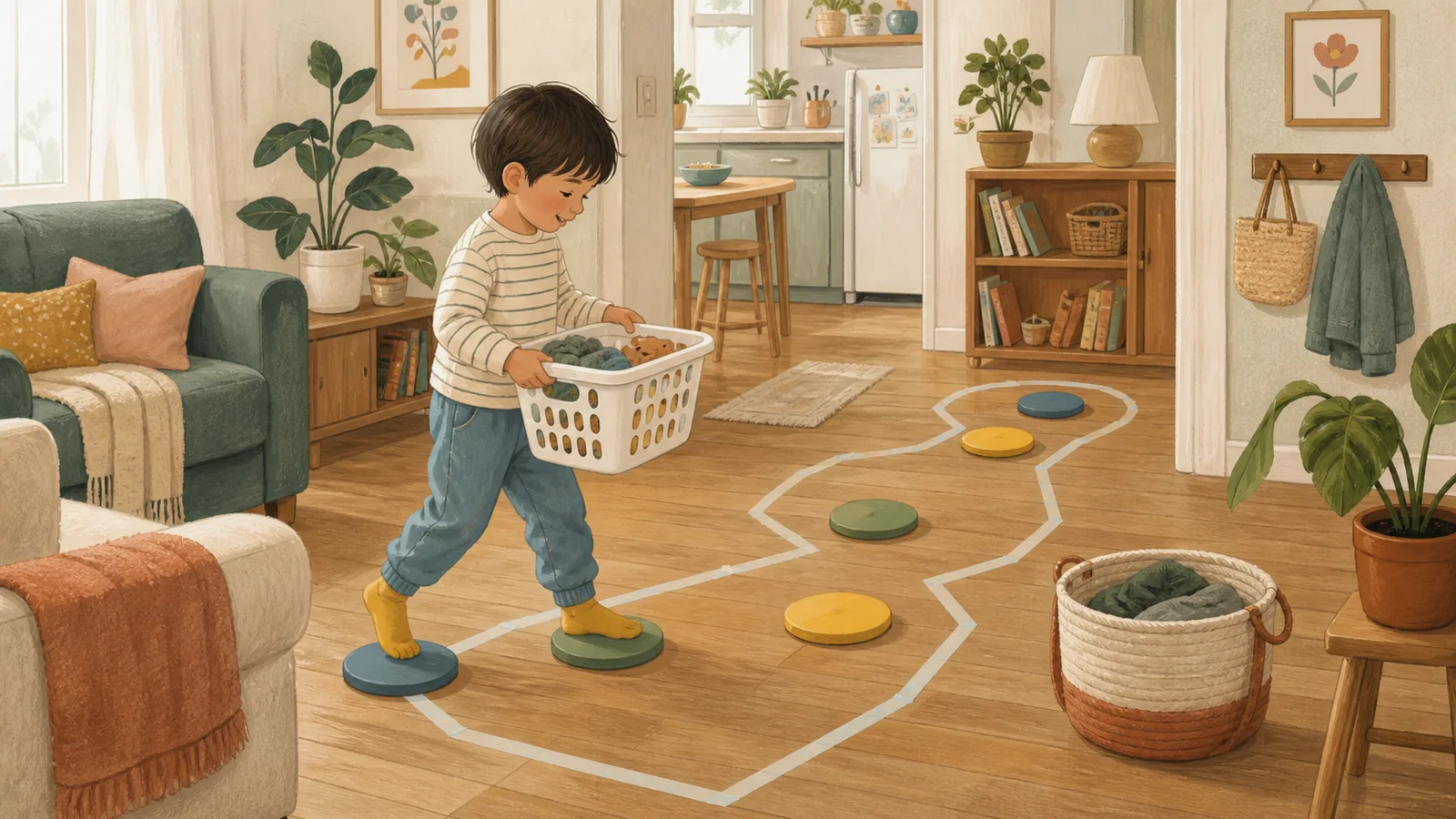
Small-space active play works when movement is easy to predict. Clear one lane, choose one action and mark a stop. More equipment usually adds collisions, not value.
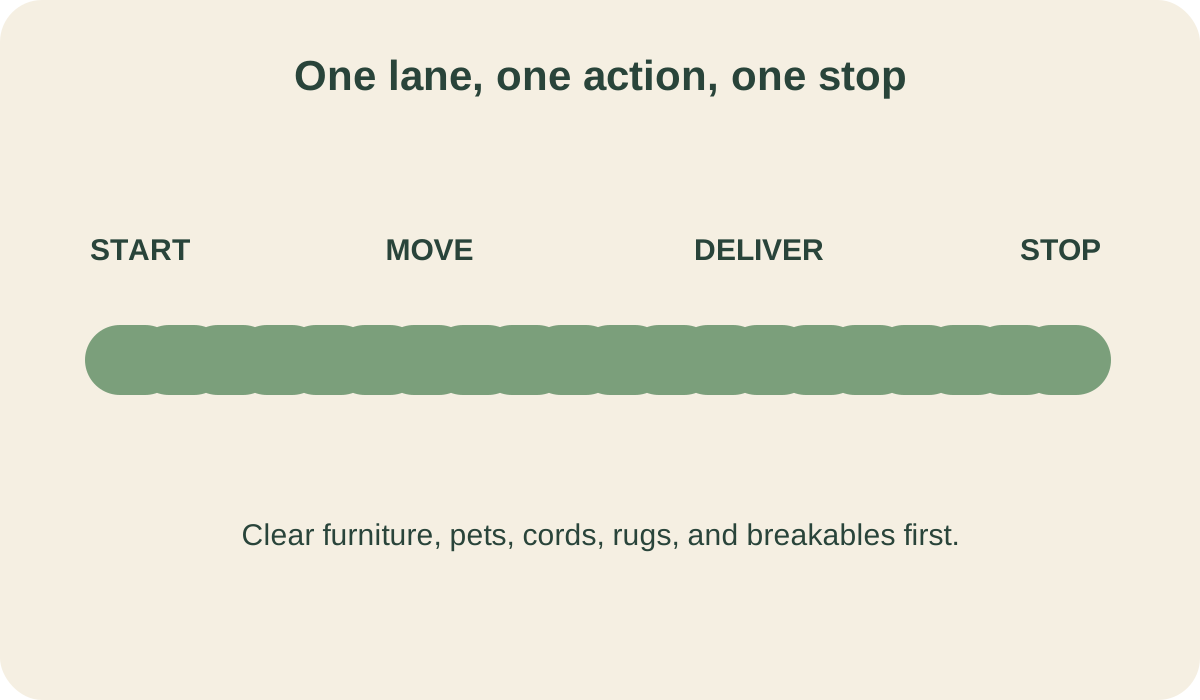
Clear the lane
Move coffee tables, cords, lamps, wheeled chairs, pets and breakables. Check floor grip and overhead clearance. Close access to stairs and kitchens. Floor cushions do not make furniture climbing safe, and a sofa is not a trampoline.
Use flat markers that will not slide. Painter’s tape may damage finishes or become loose; test it and remove after play. Keep the adult positioned where movement ends, not behind a camera.
Eight contained games
Basket delivery
Carry one stuffed animal from a start marker to a laundry basket, walk back, repeat. Change the movement—slow steps, sideways steps, tiptoe—rather than adding objects. Do not ride in the basket.
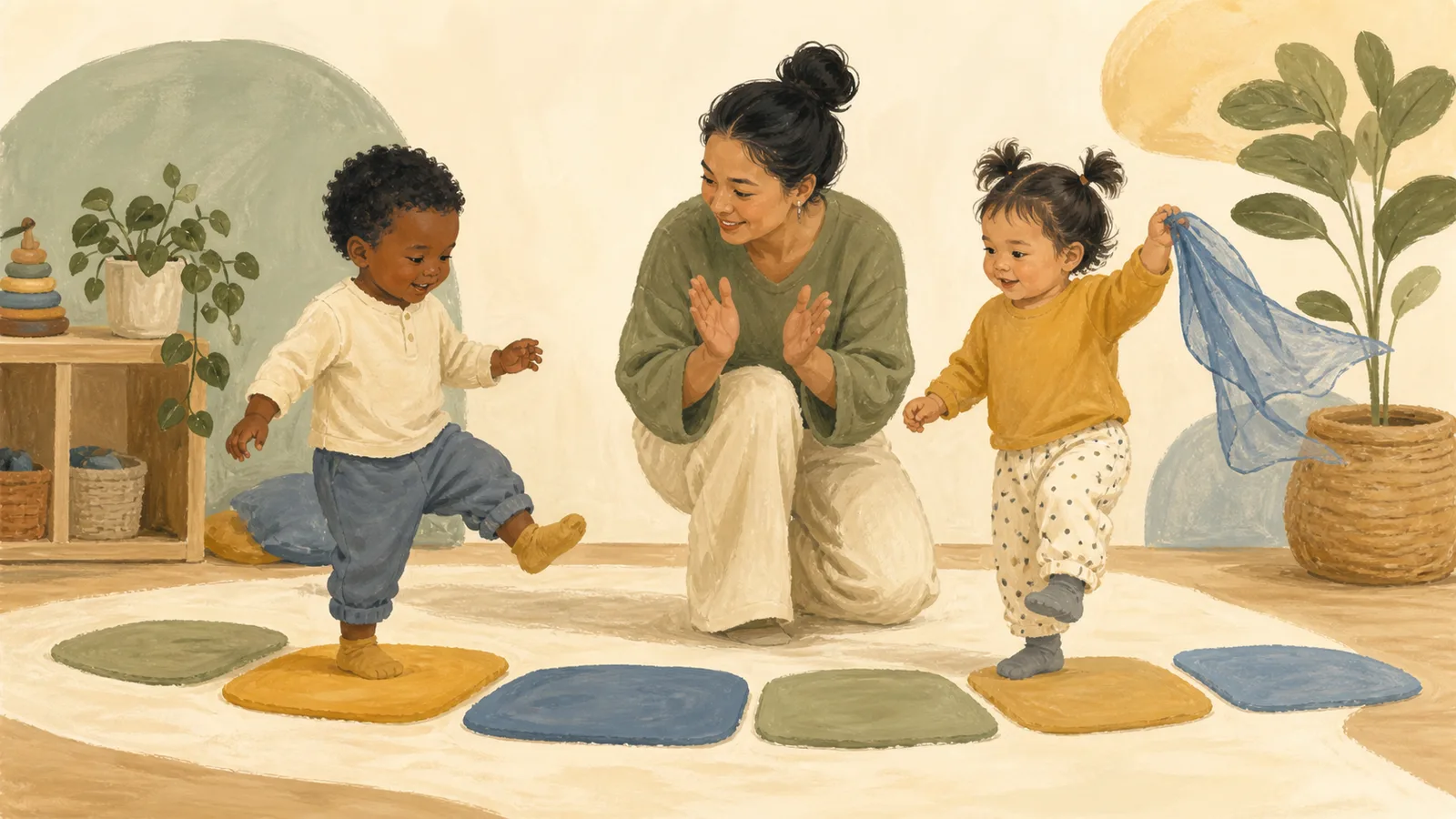
Color stepping
Place three nonslip markers in a line. Name the next marker or let the child design the sequence. Keep gaps small enough for stepping, not leaping.
Wall push
Place palms on a clear wall and push for a short song line, then relax. This gives effort without travel. Avoid doors, glass and unsecured furniture.
Animal lane
Crawl like a bear or move slowly like a turtle from start to stop. Adults can model at their own safe level; no race is required.
Freeze and breathe
Move while a caregiver hums or taps softly; freeze when sound stops. Keep volume low and use walking rather than running.
Pillowcase pull—objects only
Pull one lightweight stuffed toy in a sturdy cloth bag along the lane. Never put a child in the bag and remove any drawstring.
Scarf current
An adult moves a short lightweight scarf high, low and side to side while the child mirrors. Keep fabric away from faces, necks, fans and heaters; put it away afterward.
Book-action route
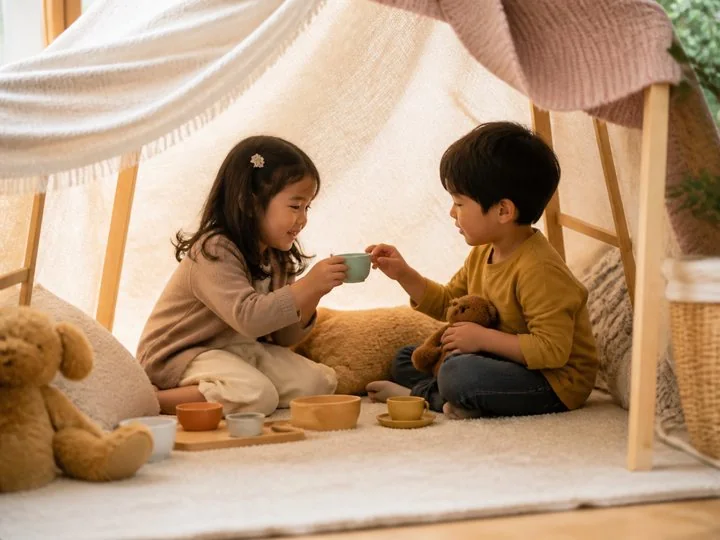
Choose three actions from a familiar story—stomp softly, reach, curl—and perform them on separate markers. Our rainy-day pretend play adds narrative without more equipment.
Make it neighbor-aware
Replace jumping with rises onto toes, running with fast arm swings, balls with cloth delivery, and stomping with silent giant steps. Use daytime hours and a rug pad where appropriate, but do not assume foam makes repeated impact inaudible.
Rhythm can organize movement at low volume. The toddler rhythm games include tempo and stop-start variations.
Mixed ages
Give each child a separate start marker and alternate turns. Babies need a protected floor zone outside the lane; older children can design routes but should not increase height or speed for younger siblings. Remove small markers when mouthing children are present.
How much movement?
CDC early-care standards encourage multiple opportunities for active play across the day, indoors and outdoors. Those program-level recommendations are not a demand that a family recreate a childcare schedule at home. Several short bouts, errands, outdoor time and ordinary movement can all contribute.
When outdoor space is available, use the site-first selection in our small outdoor-space guide. Indoors, stop if the lane becomes slippery, crowded or dysregulated.
Sources and research note
The structure is informed by CDC early-care physical activity standards, physical activity guidance, and its classroom activity implementation guide. Research hosted by CDC found indoor space associated with activity in family childcare homes. Household fall boundaries draw on AAP fall prevention.