
The best first instrument is usually one a toddler can make sound with deliberately, stop independently, and use without releasing small parts. Begin with a single drum or securely enclosed shaker before buying a crowded “band in a box.”
Quick comparison
| Type | Child action | Strength | Watch closely |
|---|---|---|---|
| hand drum | palm or fingers tap surface | direct control; shared pulse | volume, torn head, detachable parts |
| enclosed shaker | whole-arm or wrist shake | immediate sound with simple action | filler access, cracked shell, end shape |
| broad bell | lift or shake | clear start/stop sound | detachable clapper, handle, volume |
| rhythm sticks | tap together or on floor | many patterns and surfaces | throwing, splinters, eye-level swinging |
| scraper | move stick across ridges | sustained controlled action | separate striker, sharp ridges |
| simple pitched bars | strike a bar | contrast pitch and force | mallet, loose bars, high near-ear volume |
This table describes categories, not approval of every product. Follow the current manufacturer’s age label and inspect the exact construction.
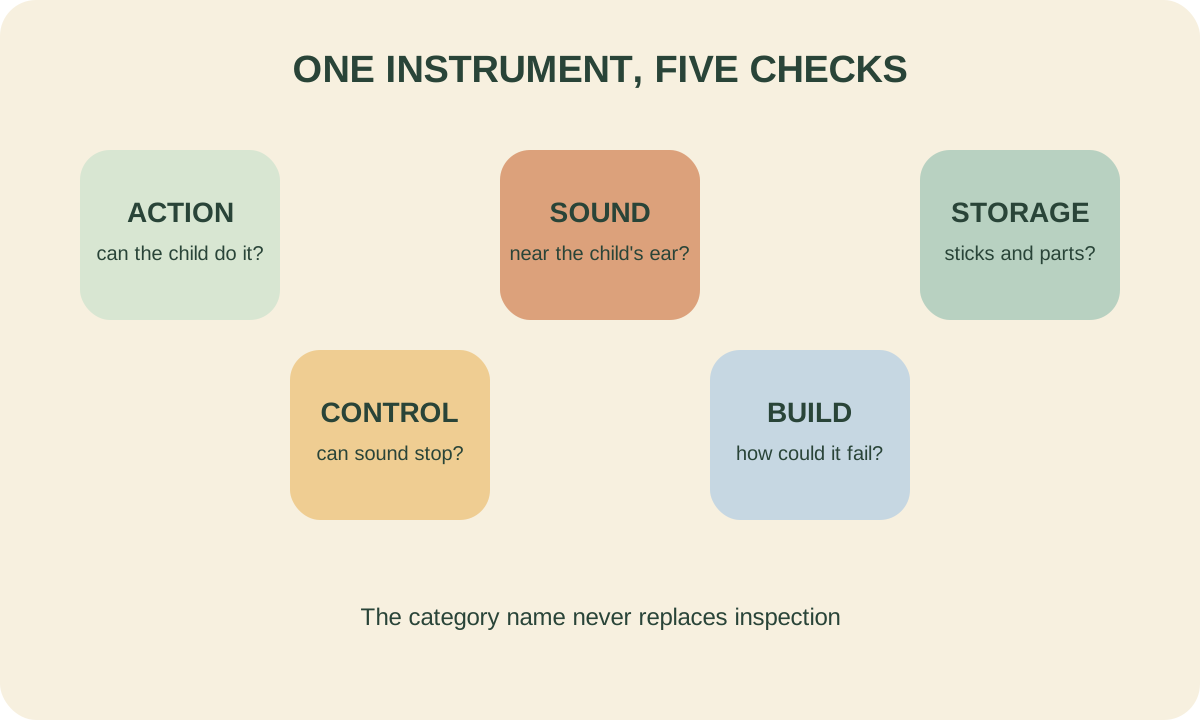
The five-part selection check
1. Can the child control the action?
A large drum offers a broad target. A shaker produces sound with less precision. A triangle or xylophone requires a separate striker and more controlled aim. Choose success without requiring an adult to position the child’s hand every turn.
2. Can the sound stop?
Child-controlled sound is easier to connect with action. An electronic instrument that continues a long song after one press reduces control and can make turn-taking unclear. Look for a short response or a reliable off switch.
3. What happens at close range?
Toddlers hold sound makers near faces. Listen from that distance before offering the item, then redirect instruments away from ears. A toy comfortable across the room may be harsh at the child’s ear.
The WHO safe-listening standard gives a child mode based on 75 dB for 40 hours per week for personal listening systems. A toy instrument is a different use pattern, so do not treat that number as a simple home certification threshold. Lower volume, more distance, shorter duration, and quiet breaks all reduce exposure.
4. How can it fail?
Inspect seams, glue, caps, filler, drum heads, staples, jingles, handles, fasteners, paint, wood grain, cords, mallets, magnets, and battery compartments. Retire cracked or loose instruments immediately.
A 2026 CPSC warning about a multi-instrument toddler set involved a dome that could detach and release small balls. The lesson is not that all musical sets are unsafe; it is that an enclosed filler is only safe while the enclosure remains secure.
5. Where will it live?
Store instruments in a shallow basket where each can be placed without tangling. Keep mallets and sticks in an adult-controlled location if the child swings or throws them. A small sound shelf is more inviting and easier to inspect than a deep bin.
A sensible first sequence
- Body percussion: clap, pat knees, stamp while supported.
- Hand drum: direct hand-to-surface feedback.
- Enclosed shaker: contrast moving and still.
- Two surfaces: tap a stick on floor and drum only when motor control is ready.
- Pitched contrast: introduce two or three clear tones without asking for a song.
There is no need to complete the sequence. A child may prefer singing and movement. Our music play for babies emphasizes responsive voice and pause; the upcoming rhythm and movement games use no instrument set at all.
Three ways to play with one instrument
Copy once
Make one sound and wait. If the child responds, copy their sound rather than repeatedly demanding they copy yours.
Start and stop
Play while a scarf moves; stop when it rests. Keep the cue slow enough to follow. The goal is shared timing, not perfect inhibition.
Compare force gently
Demonstrate soft and medium taps. Avoid inviting “as loud as possible.” Use words such as quiet, ringing, short, rough, and smooth without quizzing.
Do tuning and material matter?
A stable, pleasant pitch can make repeated listening more comfortable, but a toddler does not need concert tuning to explore sound. Likewise, wood is not automatically safer or more musical than metal or plastic. Construction, finish, weight, sound, and repairability matter more than material prestige.
For broad marketing language such as “boosts intelligence” or “expert designed,” use the educational-toy claim audit.
Shared-home boundaries
Create a music zone and a quiet zone. Set instrument hours if siblings work, sleep, or become distressed by sound. Offer a fabric pad for tapping, humming, finger songs, or silent conducting as alternatives.
Do not require a sound-sensitive child to tolerate the activity as developmental practice. Headphones are not the only solution; lowering or removing the source comes first.
Frequently asked questions
Are egg shakers safe for toddlers?
Only if the exact product is age graded for the child and its shell cannot open or crack to expose filler. “Egg shaker” is a shape, not a safety certification.
Are xylophones too loud?
Some can be harsh near the ear, especially with a hard mallet. Test from the child’s position, limit force and duration, and choose quieter alternatives if needed.
Can toddlers use real instruments?
Some adult instruments have strings, sharp hardware, fragile parts, heavy bodies, or detachable pieces. Use only with direct adult control; an age-graded toy instrument is usually a better independent option.
How many instruments should be out?
Two or three contrasting actions are plenty. A smaller selection improves inspection, turn-taking, and noise control.
Sources and research note
Safety guidance comes from the CPSC rattles FAQ, toy safety center, and a current 2026 warning about a toddler instrument set. Hearing context comes from AAP guidance on noise and children, ASHA’s noisy toys guidance, and the WHO safe-listening standard. LWT did not acoustically or hands-on test commercial instruments.