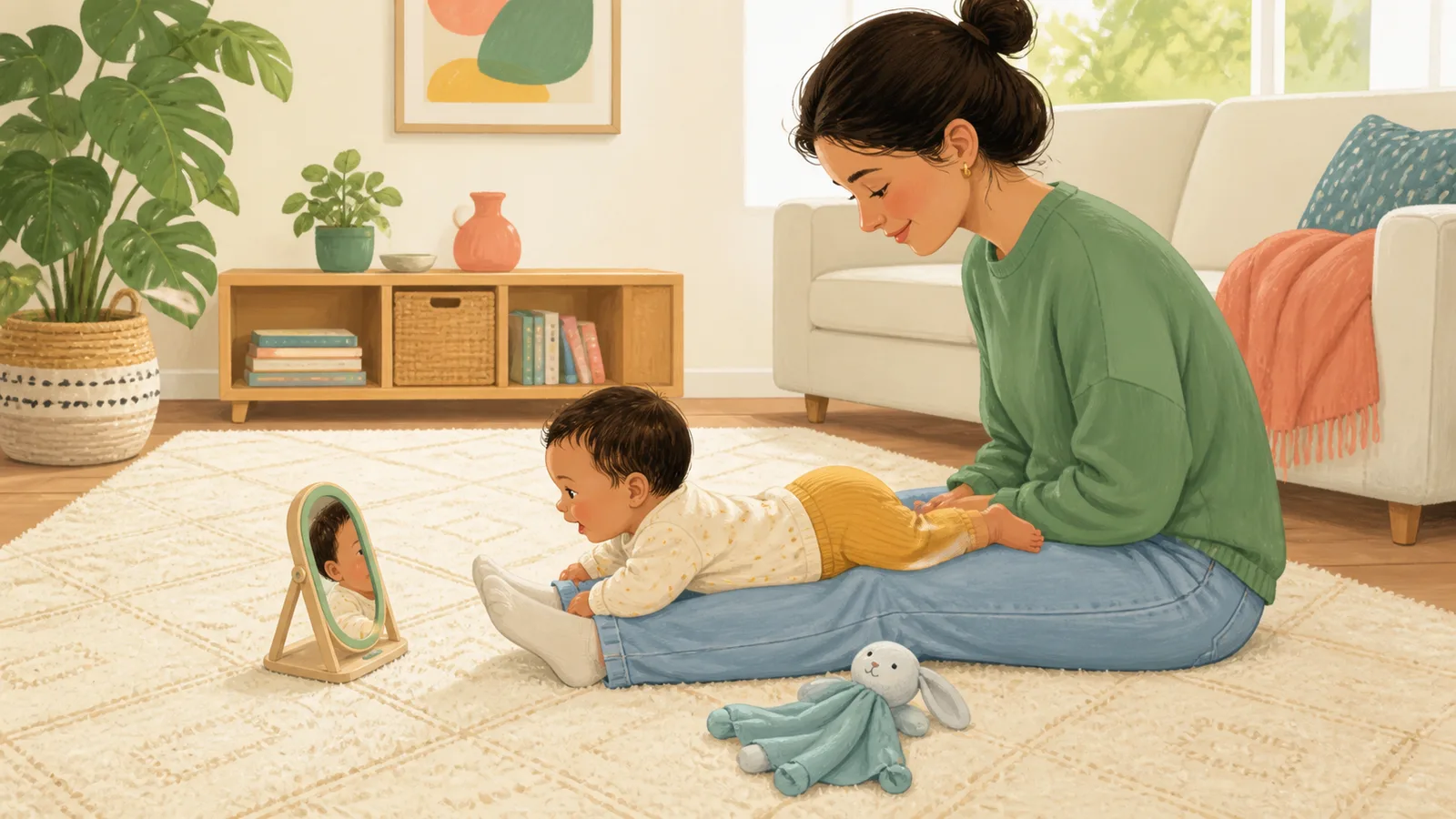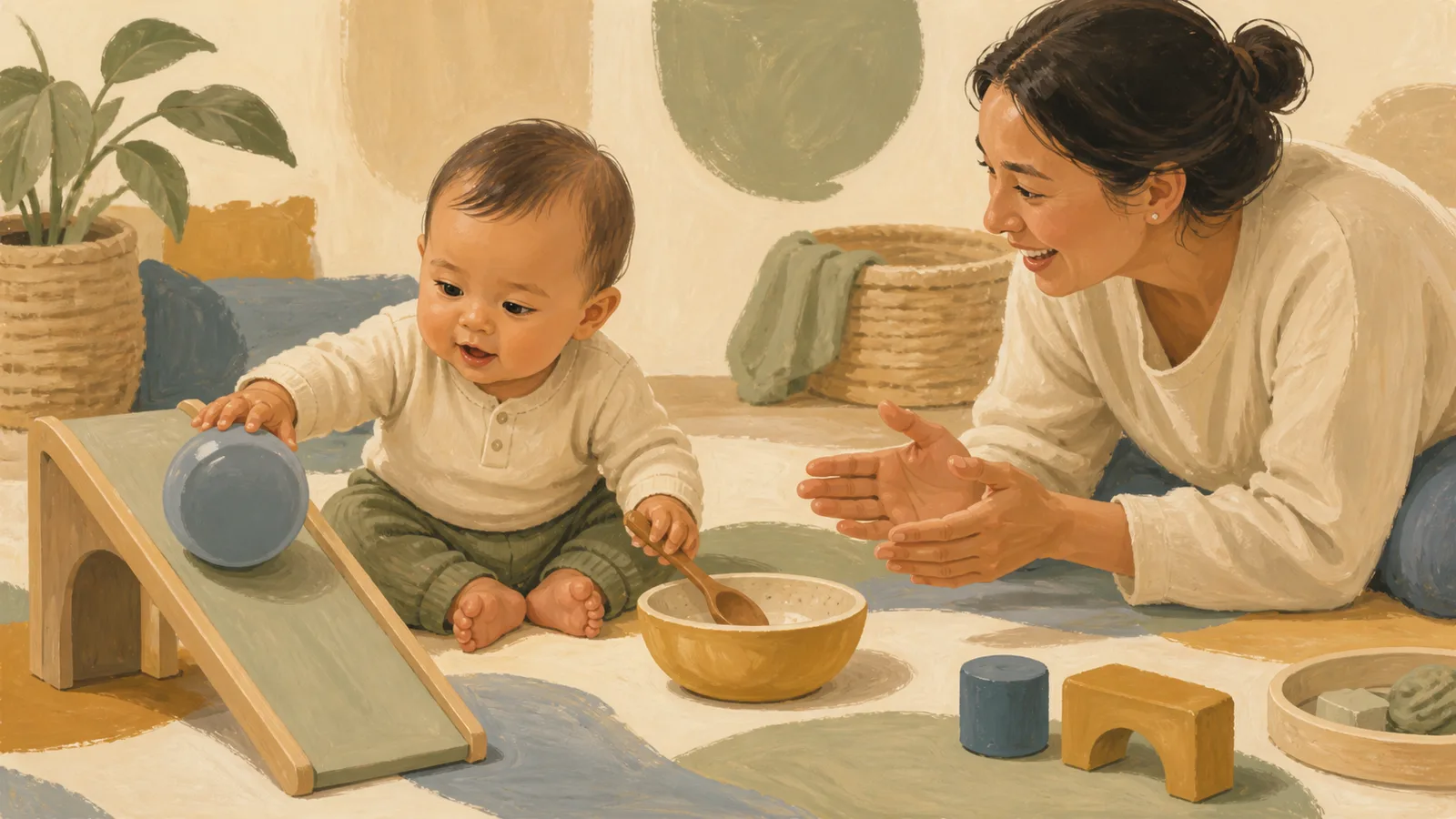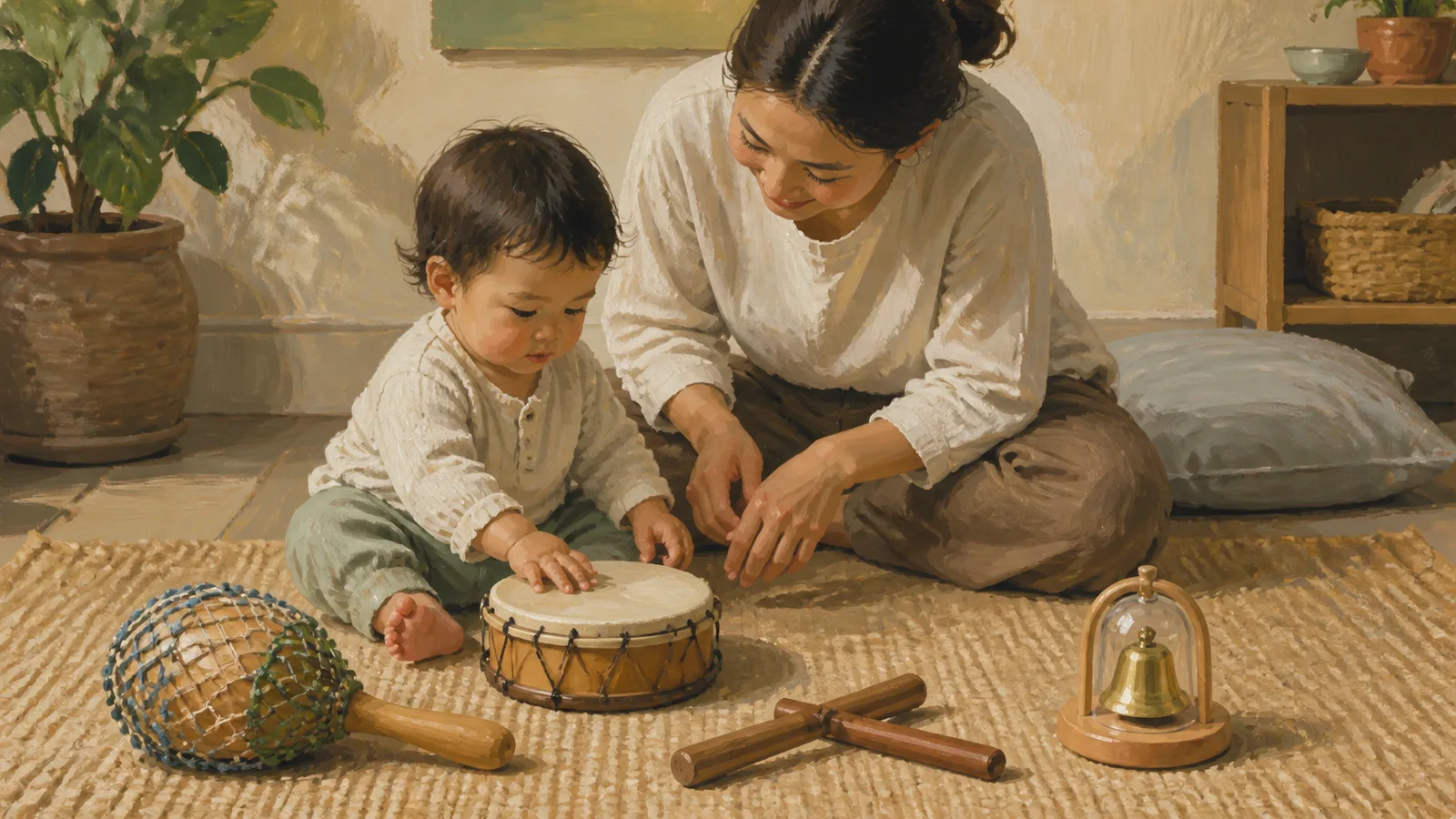

Your voice is the most adaptable musical instrument in a baby’s day. It can slow when the baby stills, repeat when they kick, soften when they turn away, and stop when they need a break. Music play is less about performing a song correctly than building a responsive exchange.
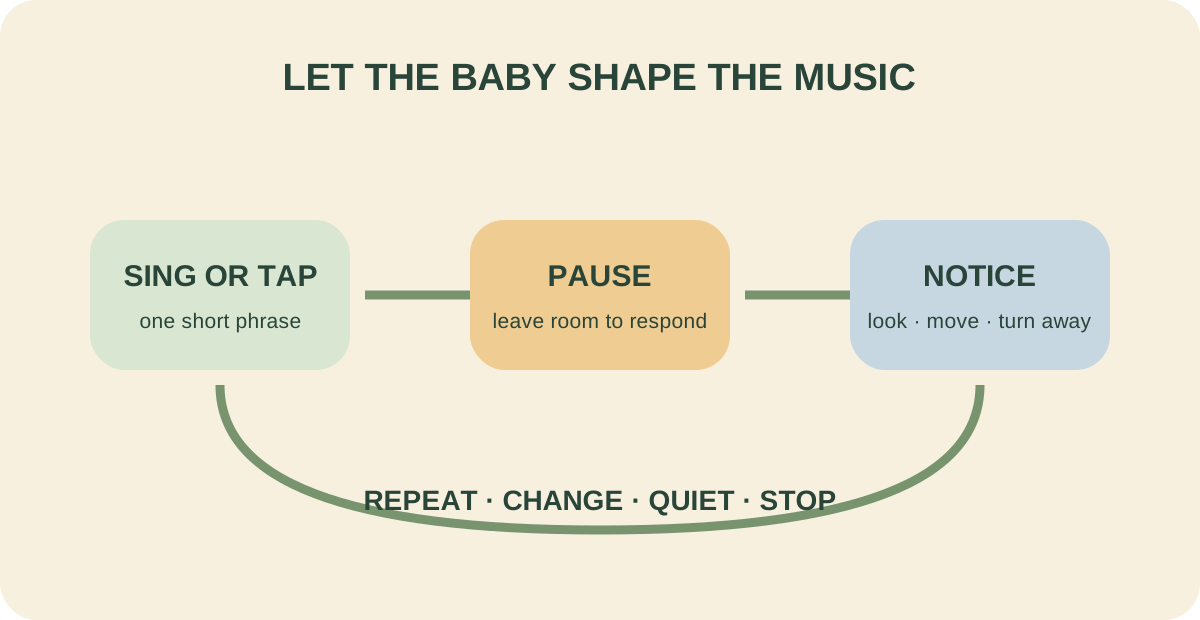
Seven ways to make music together
1. One-line song
Sing one short line about what the baby is doing: “Your feet are moving.” Repeat it once with the same tune, then pause. The baby’s look, movement, or sound can determine the next line.
2. Name and silence
Sing the baby’s name across two or three notes. Leave a long silence. Answer any comfortable vocalization as if taking a conversational turn, without demanding imitation.
3. Knee pulse
With the baby supported in a safe awake position, tap a slow pulse on your own knees. Change to a faster pulse briefly, then return. Do not bounce a young baby roughly or manipulate limbs to force synchronization.
4. Scarf rise and fall
Move a lightweight cloth up and down in time while the baby is awake and supervised. Keep it away from the face and remove it completely when play ends. Loose fabric never belongs in an unattended sleep space.
5. Sound location
Use one quiet, baby-safe rattle at midline, then slowly shift it within the baby’s comfortable visual field. Do not shake close to an ear. Follow the exact product’s age grading and inspect its enclosure.
6. Familiar routine song
Use the same brief melody before changing clothes, washing hands, or putting toys away. The song can make sequence predictable, but it does not need to control the baby’s emotion.
7. Household rhythm duet
Tap a broad spoon softly on a lightweight bowl while the seated baby uses a second safe object or watches. Copy one of the baby’s sounds or pauses. Our cause-and-effect play guide explains how immediate physical and social responses overlap.
Read cues, not a timer
Continue when the baby appears comfortable and engaged: sustained looking, relaxed movement, vocal response, a smile, or quiet attention. Change or stop when the baby repeatedly looks away, stiffens, startles, arches, rubs eyes, fusses, or becomes disorganized.
Looking away can be regulation, not rejection. Pause without moving back into the baby’s gaze. A short musical exchange that ends well is more responsive than completing all verses.
Live singing and recorded music
Research has studied infant-directed singing as a live social interaction. A systematic review found promising effects for infants, parents, and dyads, while also noting variation across studies. Research comparing interactions has found live singing can sustain infant attention; it remains difficult to separate music from eye contact, timing, touch, familiarity, and relationship.
Recorded music can be enjoyable and can give caregivers new songs. It cannot notice the baby. Keep background audio low and allow quiet periods, especially because constant sound can compete with speech and play attention.
You do not need “baby music.” Sing music you know and can deliver gently. Lyrics should be comfortable for your family; the responsive voice matters more than genre prestige.
Music during floor and tummy play
Singing can accompany several awake positions, but it should not be used to push an uncomfortable baby through a long session. Our tummy-time ideas include chest-to-chest, lap, side-lying, and floor variations. Place your face or quiet sound where the baby can comfortably orient rather than using noise to pull the head through strain.
Do babies need an instrument set?
No. Your voice, hands, floor, and one safe object are enough. If you buy a rattle or shaker, verify the current age grade, inspect seams and end shapes, and choose a sound that remains comfortable near the child’s usual position.
As babies become toddlers, our first-instrument guide compares drums, enclosed shakers, bells, and tapping tools by action, sound, and failure points.
Volume and proximity
Sound at the ear matters, not how loud a toy seems across the room. Test it from the child’s position and keep noisy objects away from the head. Stop before anyone experiences ringing, muffled hearing, pain, or distress. Those symptoms deserve medical attention.
Do not put headphones on an infant for routine music play. A quiet room and live voice avoid the need to overcome background noise.
Classes are optional
A class can offer community, repertoire, structure, and a regular time to sing. It is not required for musical development. Assess whether the schedule, volume, group size, travel, cost, and teaching approach work for your baby and caregiver.
Look for teachers who welcome feeding, movement, breaks, and observation rather than requiring every baby to perform the same action.
Frequently asked questions
What if I cannot sing in tune?
Sing comfortably. Babies do not require a polished voice for responsive musical interaction. Use a narrow range, humming, rhythmic speech, or tapping if singing feels stressful.
Are lullabies only for sleep?
No, but safe-sleep practices still apply. A caregiver can sing during a bedtime routine; remove instruments and loose props before the baby is placed in the sleep space.
Is classical music better for babies?
There is no need to choose one prestige genre for cognitive claims. Use varied music at comfortable volume and prioritize responsive human interaction.
Why does my baby not clap to music?
Clapping requires motor coordination and interest. Babies may show engagement by stilling, kicking, looking, or vocalizing. Do not treat clapping as the single musical response.
Sources and research note
Evidence comes from a systematic review of live parental infant-directed singing, a 60-dyad study of infant neural tracking and rhythmic movement, a systematic review of natural musical interactions, and a study comparing singing with reading, toy play, and recorded music. Safety guidance comes from the CPSC rattles FAQ and AAP information on noise and children.