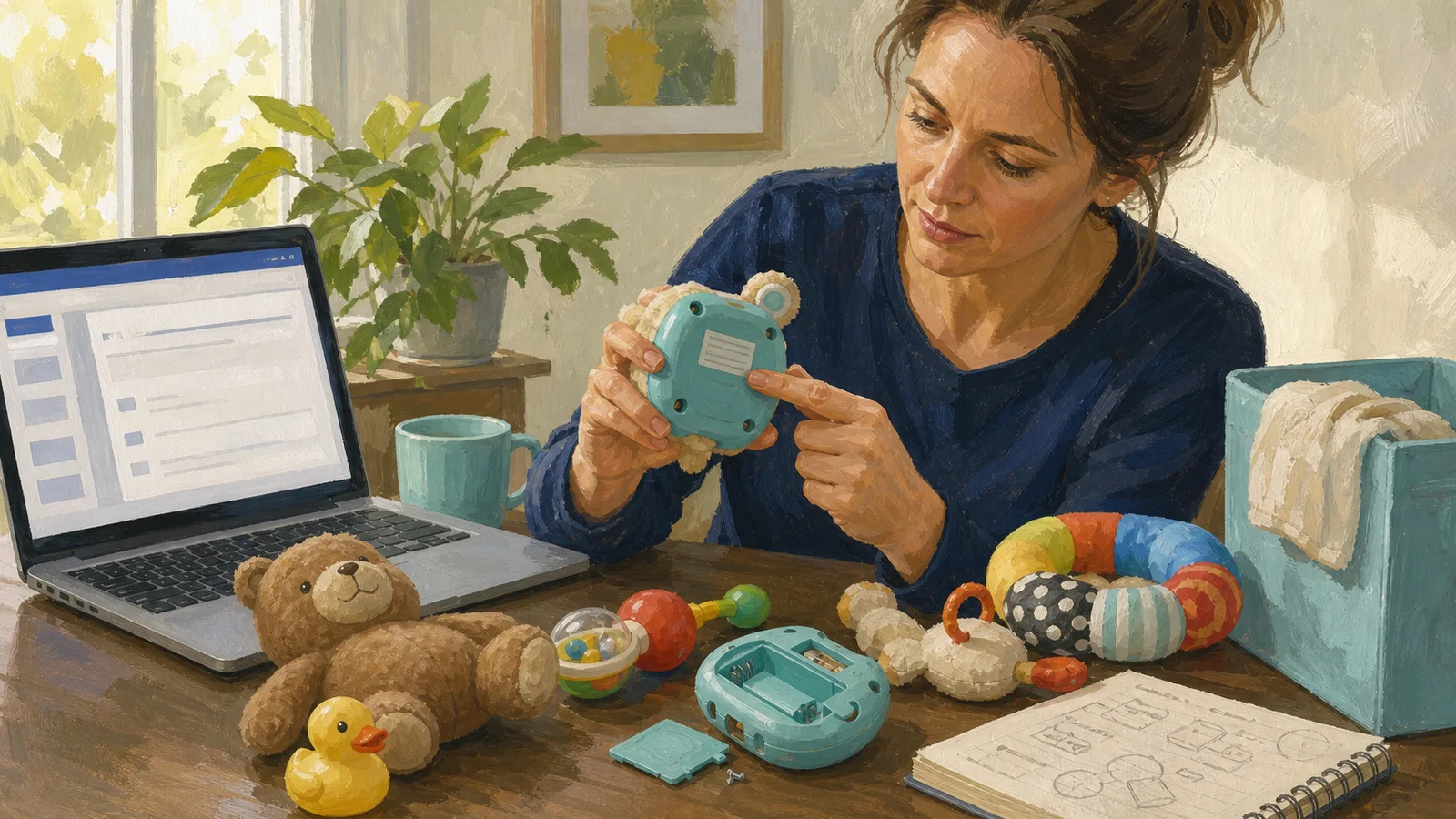
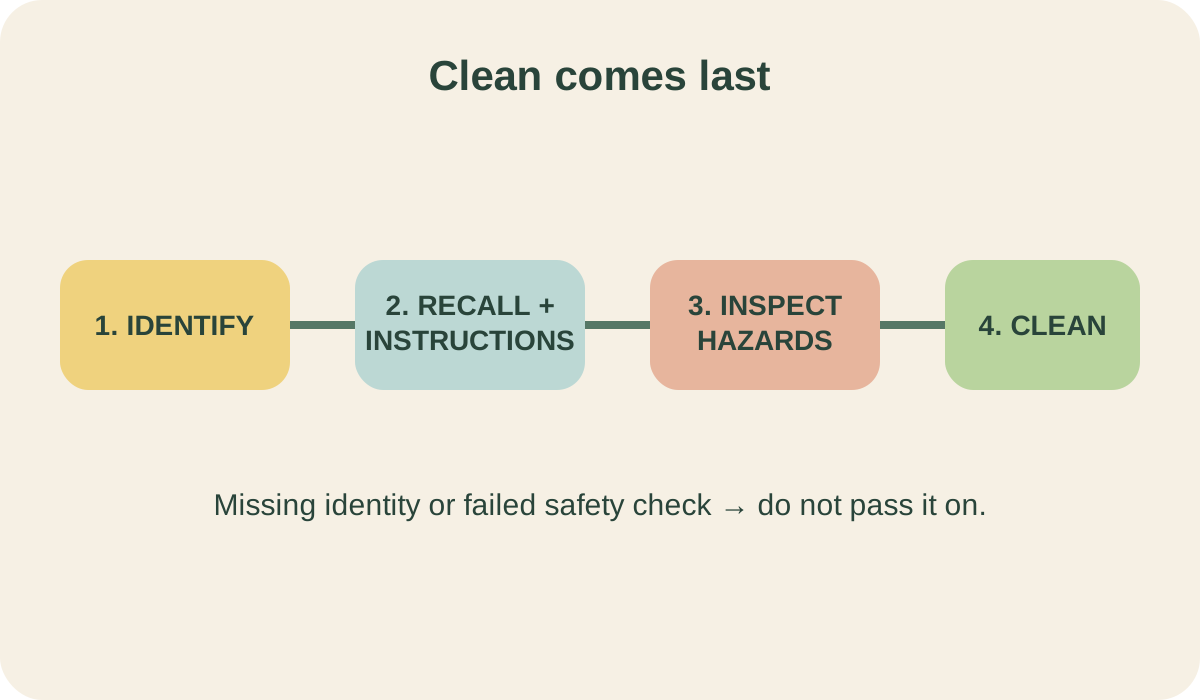
Secondhand toys can save money and extend useful life, but “washable” is not the same as safe. Use this order: identify, check, inspect, then clean. If a high-risk toy cannot be identified, pass on it.
1. Identify the exact toy
Look for manufacturer, product name, model number, date code and manufacturing label. Ask for every component and the instructions. Photograph labels before they rub away.
Search the CPSC recalls database using brand, model and product type. A secondhand marketplace listing can disappear; it is not a safety record. The CPSC notes that selling recalled products is unlawful in the United States, including resale.
If identity is missing, risk matters. A plain set of large solid blocks can be inspected more meaningfully than an electronic toy, sleep-adjacent product, ride-on, magnet set or item with a restraint. Do not guess how a product was meant to be assembled.
2. Confirm age and use
Read the original age grading and warnings. A baby who mouths and bangs toys needs different boundaries from an eight-year-old. Do not rely on the seller’s child’s age or “my kids were fine.”
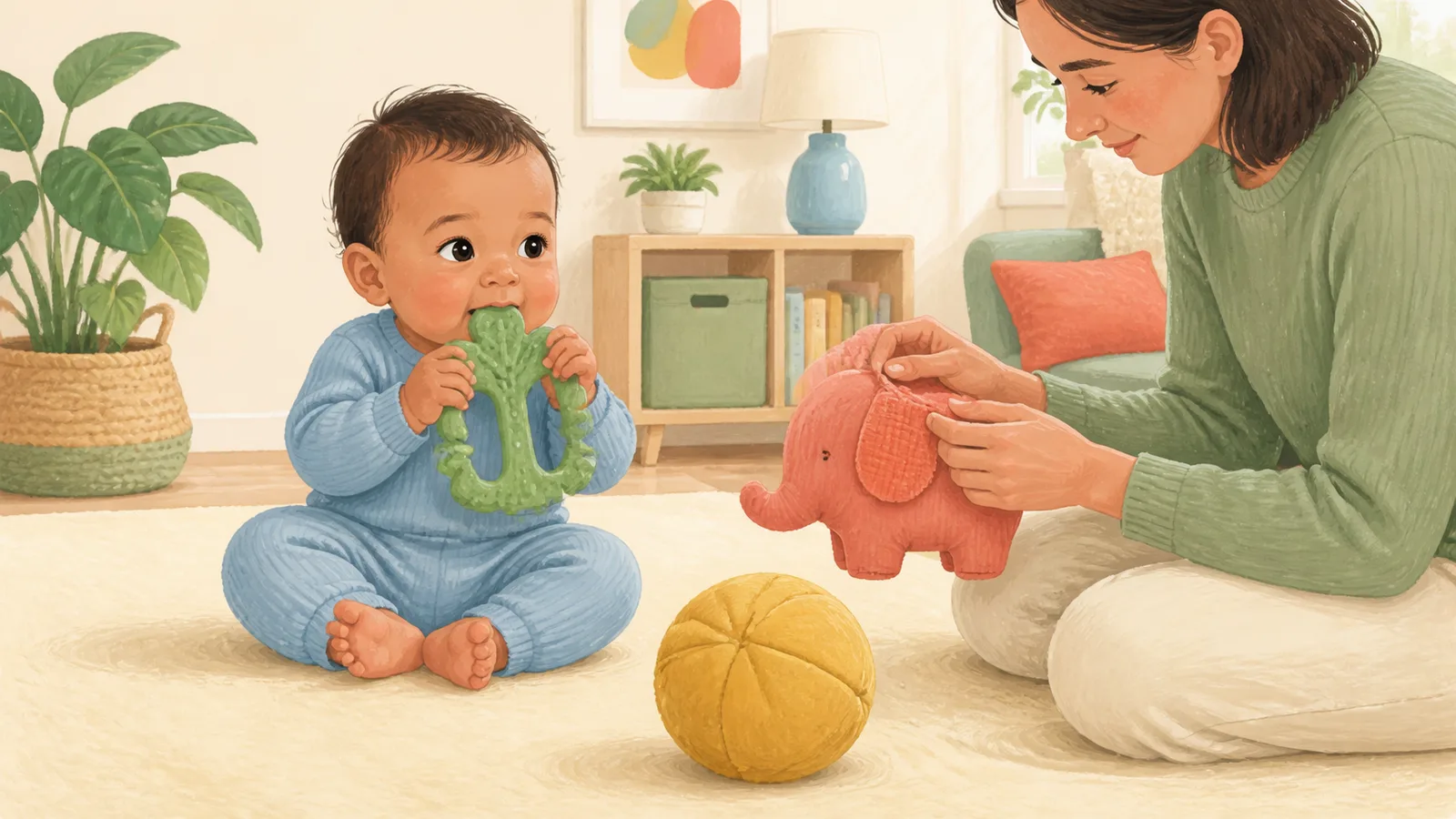
Check whether the toy has small removable pieces, long cords, projectile parts, accessible foam, button batteries or high-powered magnets. The baby mouthing guide explains why close supervision does not neutralize ingestion hazards.
Never repurpose a toy as sleep equipment, a bath toy, a teether or a climbing object unless its manufacturer designed and instructed that use.
3. Inspect condition in bright light
| Check | Reject or investigate further |
|---|---|
| Structure | Cracks, loose joints, wobble, repaired load-bearing parts, missing fasteners |
| Surface | Splinters, sharp burrs, peeling or sticky finish, bite-through material |
| Openings | Finger, limb or head-entrapment shapes created by damage or missing pieces |
| Battery/electronics | Corrosion, heat marks, missing secured door, damaged cable, exposed wire |
| Magnets | Any loose, missing or accessible magnet |
| Hygiene | Mold, pest evidence, deep porous contamination, persistent smoke/chemical odor |
| Completeness | Missing guard, cap, restraint, stabilizer, instruction-specific hardware |
Flex stressed areas gently while the toy is out of the child’s reach. Do not “test” ride-ons or load-bearing toys with a child. For an ambiguous defect, ask the manufacturer or retire the item.
Older paint and vintage toys
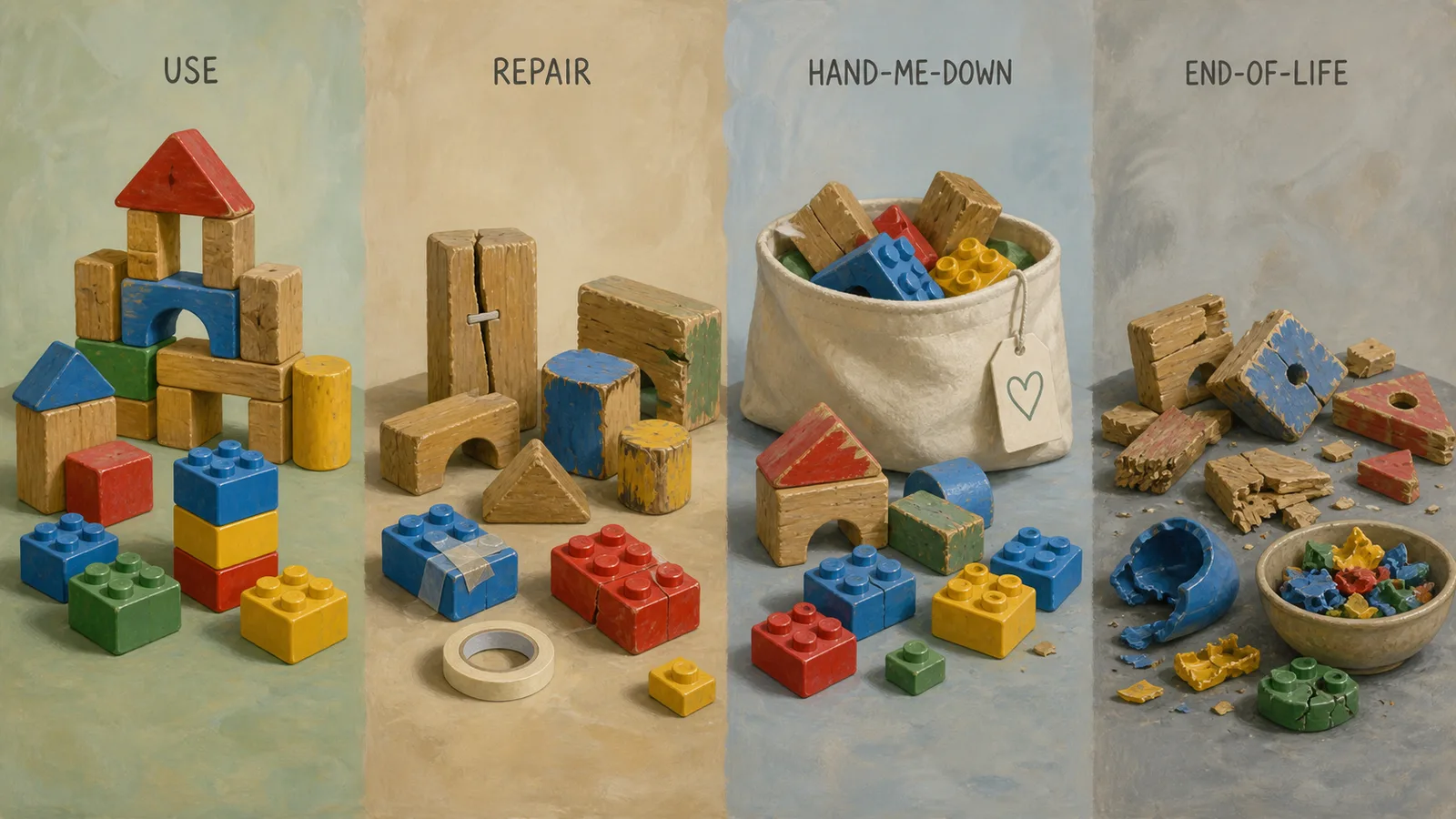
Vintage appearance is not evidence of safe materials. Older painted products may contain lead, and a home visual inspection cannot determine composition. Do not sand, scrape or seal questionable paint as a casual craft project; disturbing it can create dust. CDC guidance recommends preventing children’s access to suspect consumer products and seeking local advice about testing and disposal.
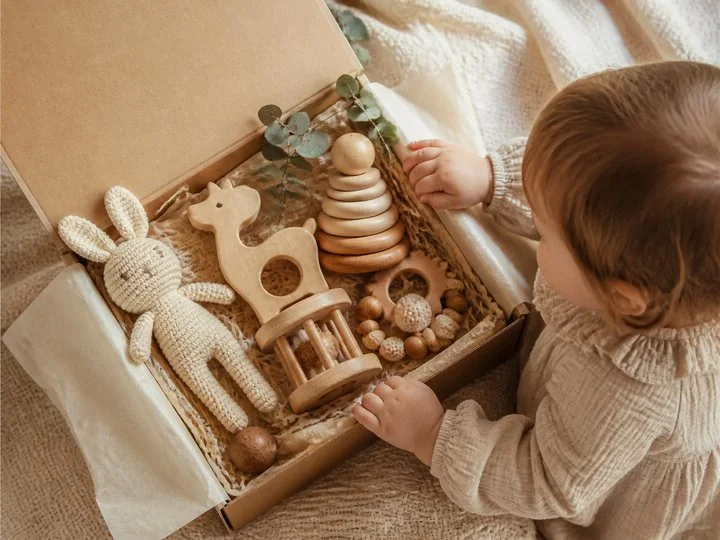
“Natural wood” also says nothing about the finish, glue, small hardware or prior storage. Our wood-versus-plastic comparison uses construction and useful life rather than treating either material as automatically safe.
Cleaning comes last
Follow the original instructions. Hard non-electronic surfaces may permit soap and water; some items allow a disinfectant with a specified contact time and rinse, while wood, fabric and electronics may not. Never mix cleaning products. Dry fully before reassembly.
Porous toys with mold, unknown bodily-fluid contamination or odors that persist after permitted cleaning are poor baby-toy candidates. Machine washing a plush cover does not inspect hidden electronic or sound components.
High-caution categories
Be especially conservative with sleep products, helmets and protective gear, large playground equipment, inflatables, ride-ons, electronics, products with button cells, high-powered magnets and anything recalled. Some safety products have histories, impacts or missing parts that cannot be verified from appearance.
For a low-risk sustainable gift, consider a new durable item with clear specifications or a well-identified simple toy that passes every check. The sustainable gift guide explains how to assess longevity without relying on vague green claims.
Frequently asked questions
Are used plastic baby toys safe after disinfecting?
Only if the exact toy is age-appropriate, not recalled, complete, structurally sound and cleanable according to instructions. Disinfecting does not reverse cracking or chemical/heat damage.
Can I tape a battery door closed?
Do not treat tape as a secure battery compartment. Stop use and obtain the correct manufacturer part or service.
Should I accept a toy with no label?
For babies, pass on complex or higher-risk unidentified products. You cannot reliably check recalls, warnings, age grading or assembly.
Sources and research note
The screening order uses CPSC resources for resale and thrift stores, toy safety, small parts, and button batteries. Paint cautions draw on CDC lead in consumer products. Health Canada provides a complementary secondhand-products checklist. This is general information; follow product instructions and local guidance.