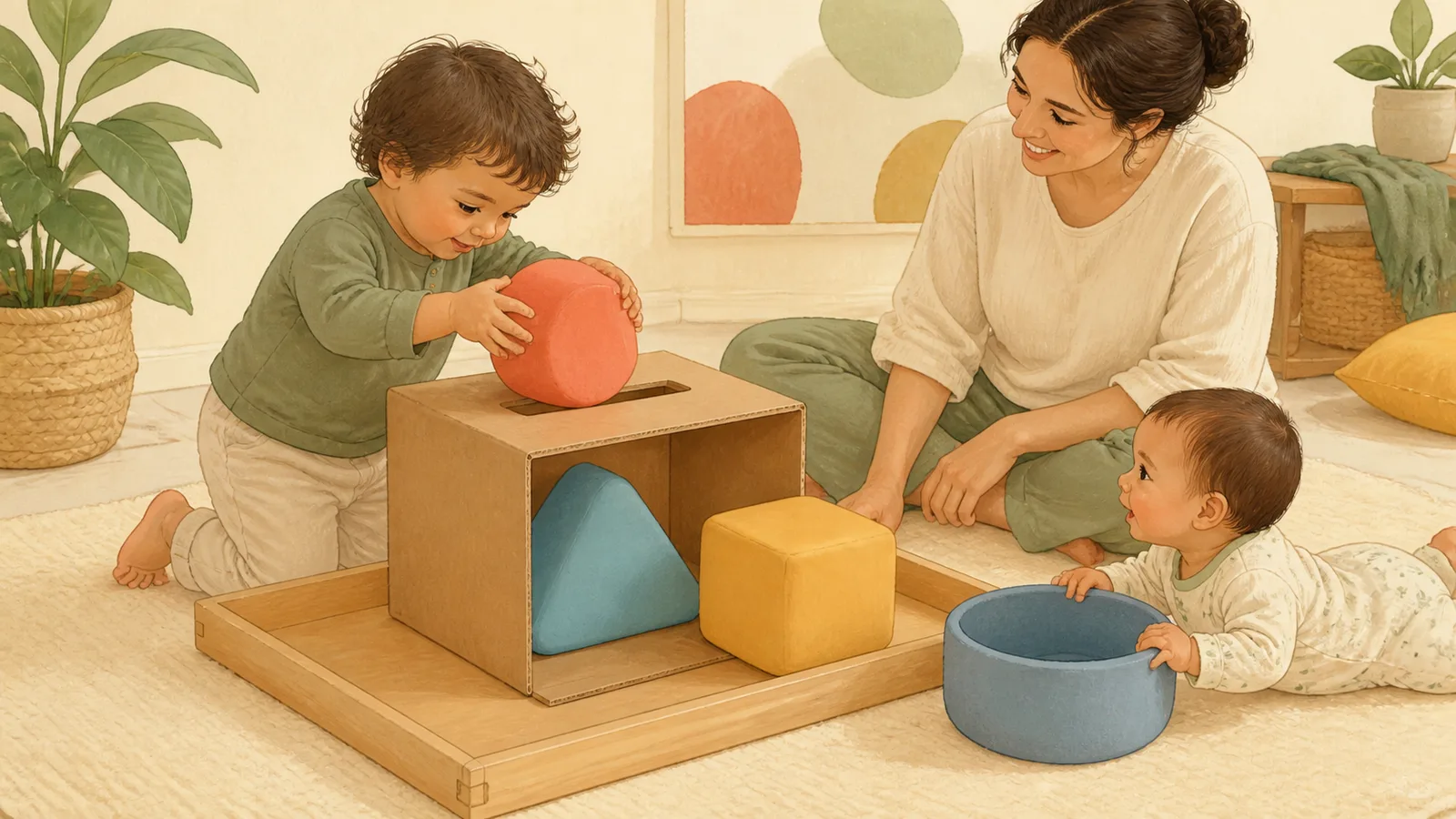
Posting play is the satisfying work of putting an object through an opening. Before that precision appears, babies and toddlers often fill a bowl, dump it, retrieve one piece, carry the container away, or repeat the same drop. Those are not failed versions of the activity. They are the foundation.
Start with an opening that makes success likely and objects large enough for the child’s age. Increase difficulty only when the current version has become easy and still interesting.
The simplest setup
Materials
- one broad, stable bowl or shallow box;
- three to five large, easy-grip objects already suitable for the child’s age;
- a clear floor area; and
- an adult within reach.
Good first objects might be large soft blocks, sturdy fabric squares, or large balls explicitly appropriate for the child. Avoid coins, bottle caps, beads, pom-poms, marbles, dry pasta, pegs, and loose craft pieces for children under three.
Place the objects beside the open container. Put one in slowly, then wait. The child may remove it instead. Follow that idea.
A four-level challenge ladder
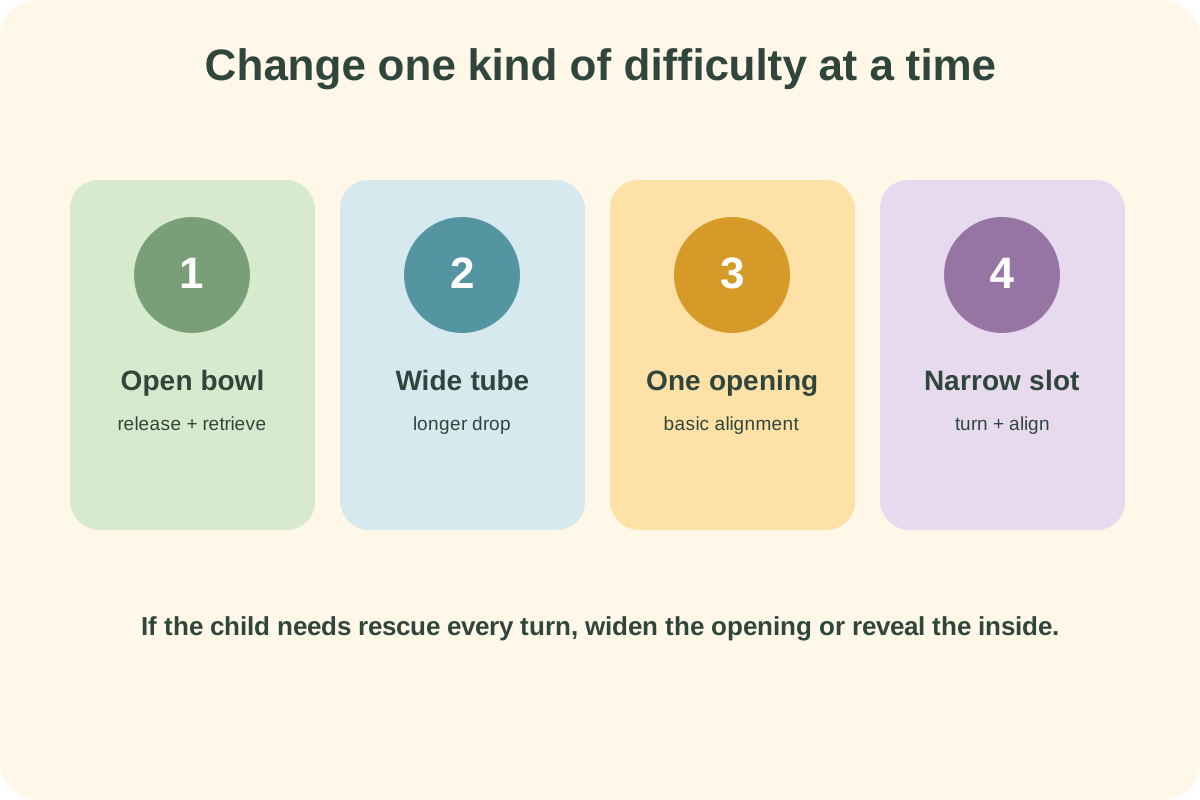
Level 1: open container
Use a bowl with a wide opening and low or transparent sides. The child can see the result, reach in easily, and practice release without aligning an object.
If everything is dumped immediately, reset with only two objects. Dumping is a clear cause-and-effect experiment: full becomes empty, objects make sound, and the container becomes available again.
Level 2: wide tube or tall container
Use a broad, stable cylinder with no sharp cut edge and an opening much wider than the object. The longer drop changes the sound and delay. Keep the other end open or easy for an adult to access; the child should not need a frustrating adult-only reset after every turn.
Level 3: one generous opening
A sturdy box with one large round or rectangular opening introduces orientation. Reinforce all cut edges and remove loose tape, staples, plastic film, and torn layers. An open back or lift-off adult panel makes retrieval quick.
Level 4: narrow slot or shape choice
Offer one slot and two compatible large shapes. A narrow slot requires rotating and aligning. A commercial shape sorter adds the further demand of choosing the matching opening. That may be appealing later but can overwhelm a child who is still learning to release on purpose.
Progression is reversible. If a tired child enjoys the open bowl again, return to it.
Six ways to play
Soft-block post
Cut or use a wide opening that accepts a large fabric block in more than one orientation. The soft block is easier to grip and quieter than a hard object. Ensure the block has intact seams and no pellets or decorations that can escape.
Scarf pull-through
An adult feeds the end of a short, tightly woven cloth through a large opening, leaving most visible. The child pulls it out, then pushes it back. Keep the cloth short, supervise directly, and stop if it loops around the neck or covers the face.
Two-container transfer
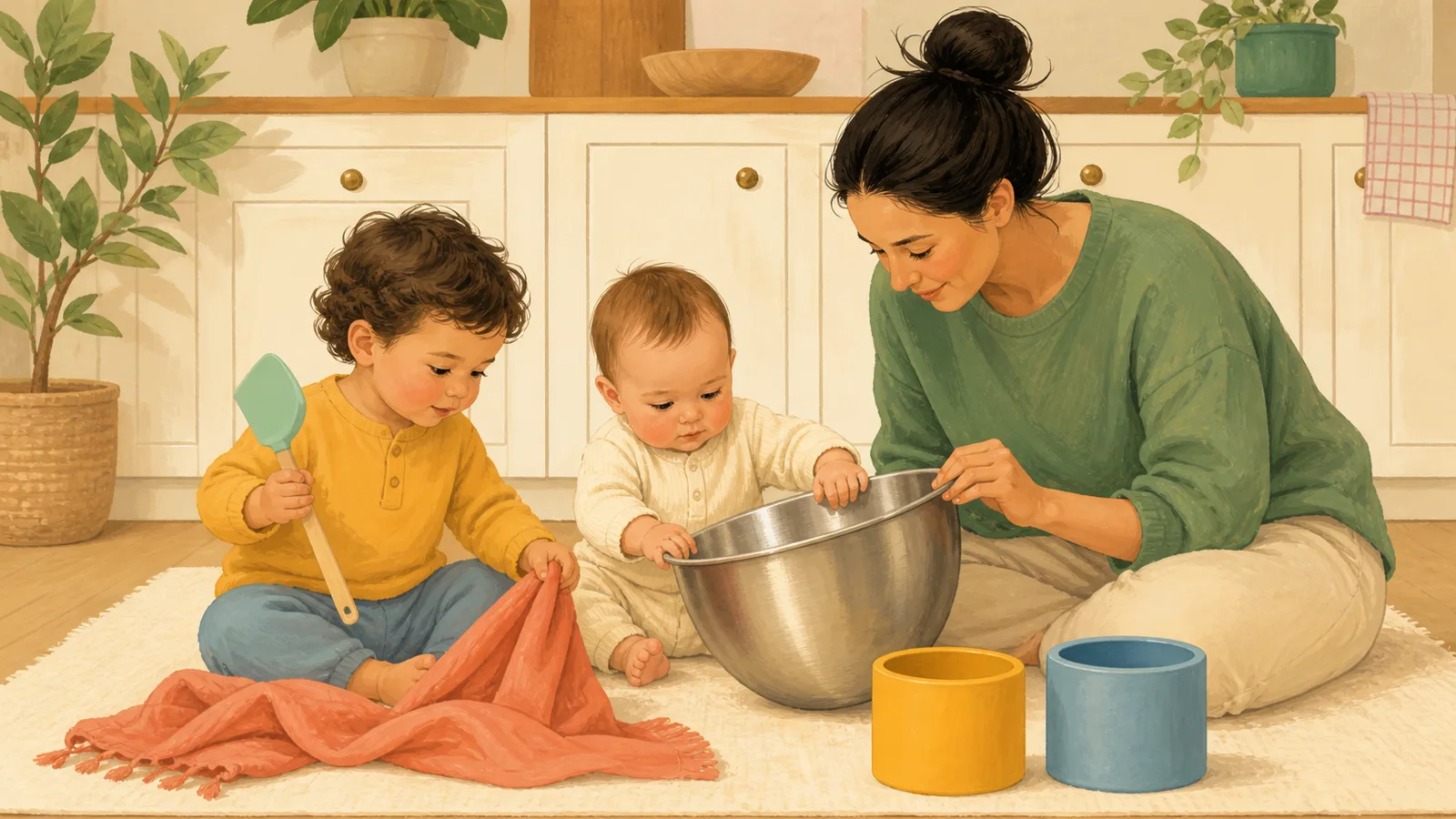
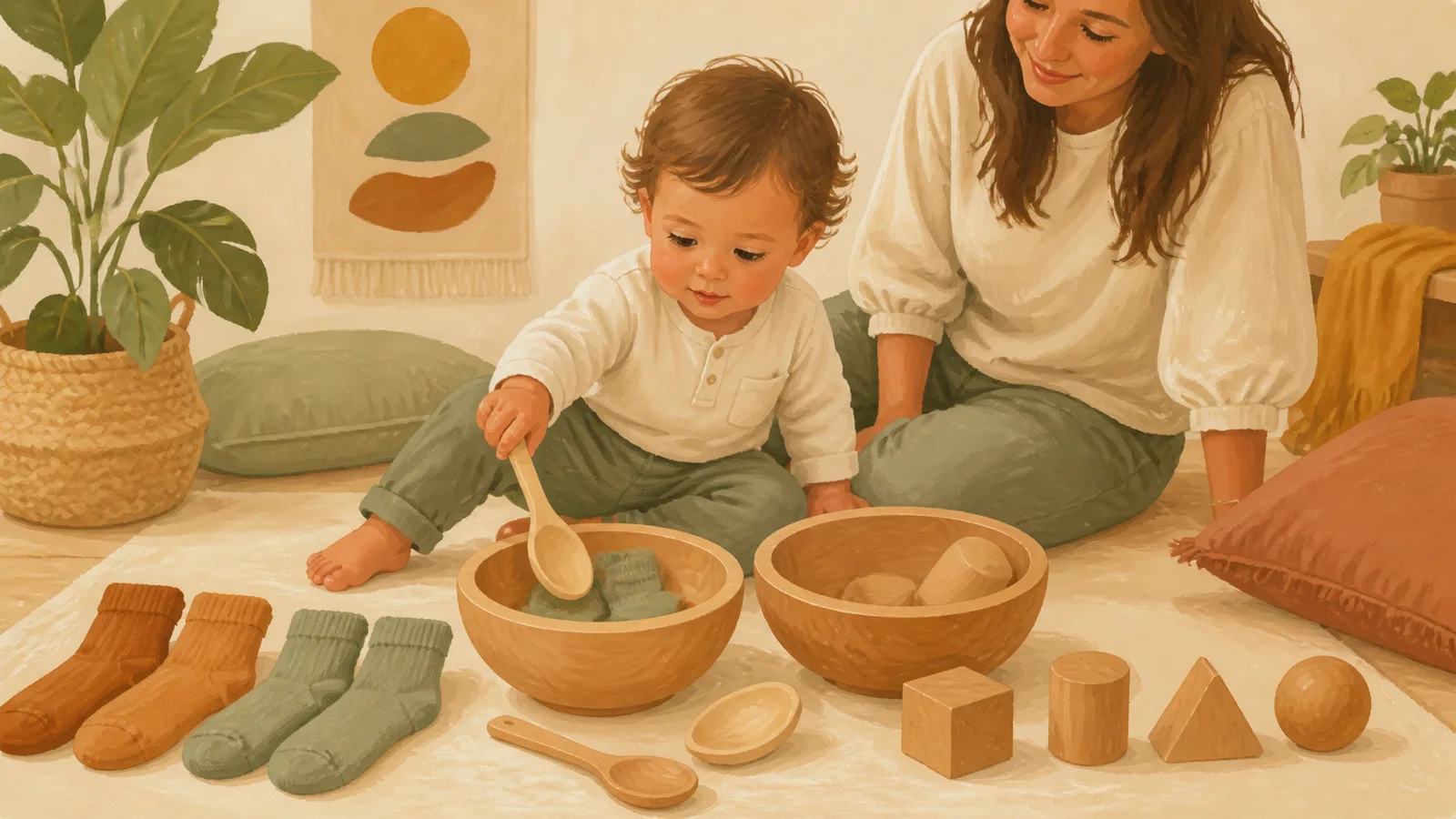
Place two open bowls side by side with three large objects. The child transfers, carries, nests, or reverses the containers. This works well for children who dislike a fixed “correct” result.
Sound comparison
Drop the same large object into a fabric basket and a metal bowl. Name the difference simply—“quiet,” “ring”—then let the child choose. Control volume and remove the metal option if banging becomes unsafe.
Find it again
Use a transparent or open-sided container. Drop an object and ask, “Where did it go?” without demanding an answer. Retrieval often matters as much as posting; a sealed mystery box can create unnecessary frustration.
Delivery route
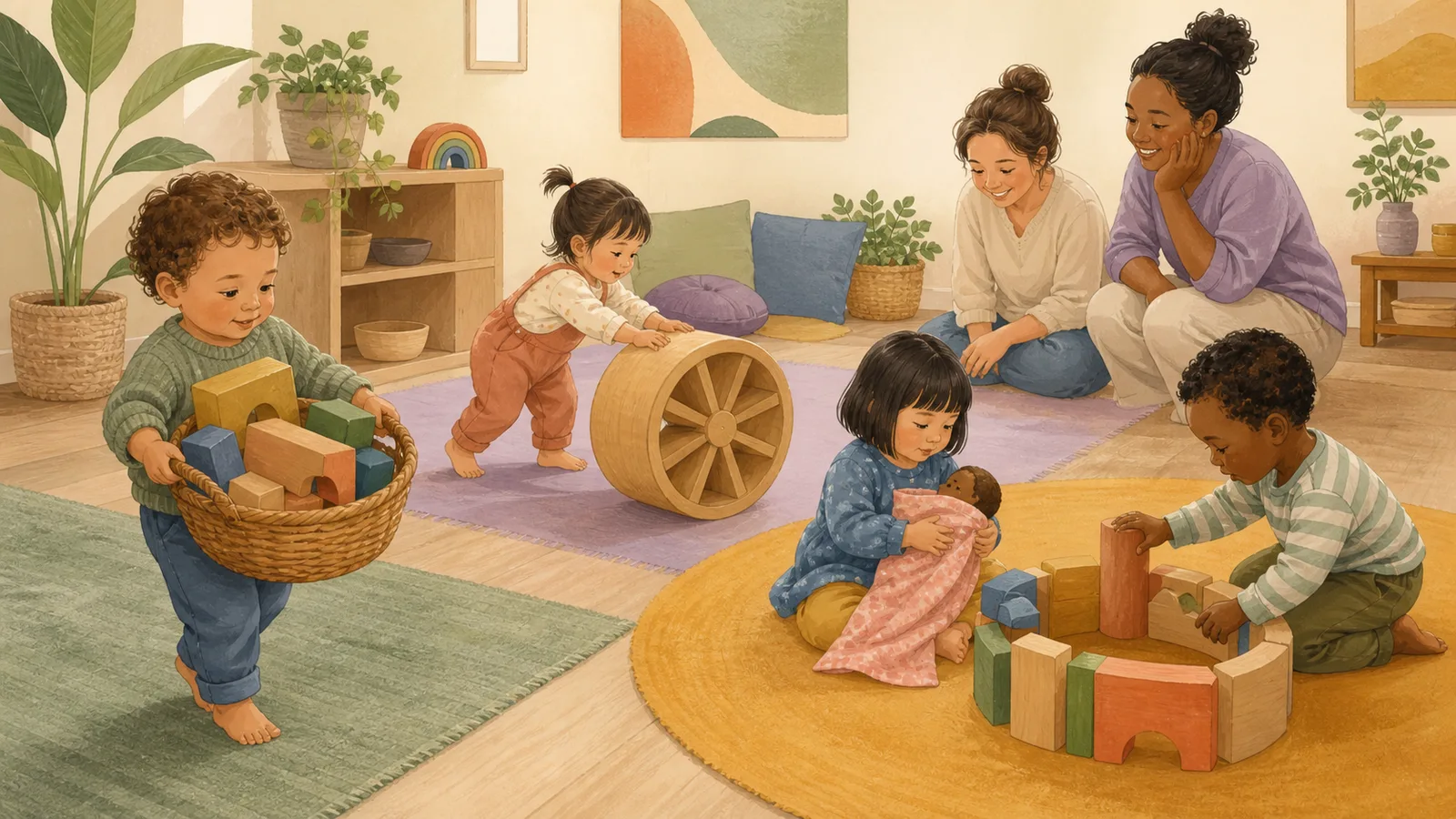
For a walking toddler, put the posting box a few steps from a basket of large objects. The activity becomes carrying and returning as well as precision. Keep the route clear and the load light.
The repeated carrying may be part of a broader pattern described in our guide to toddler play schemas. The label can help adults notice an interest, but it should not become a rule about what the child must do next.
How to tell if the challenge is right
Keep it as is when the child repeats voluntarily, varies the action, or can recover from a miss.
Simplify when the child cannot release, cannot retrieve, repeatedly seeks adult rescue, or abandons the setup after one blocked attempt. Widen the opening, remove the lid, use fewer objects, or make the inside visible.
Extend when posting is immediate and automatic but interest remains. Rotate the box, change the sound, add a second compatible shape, or move the objects a short distance away. Do not jump from a generous slot to tiny pieces.
Adult language can stay descriptive: “You turned it,” “It stopped at the edge,” or “The blue block is inside.” Avoid quizzing colors and shapes unless the child enjoys that exchange.
DIY box safety
Cardboard is convenient, not permanent. Use a clean, dry box with no staples, loose tape, shipping labels that peel, plastic windows, food residue, fragrance, or damaged layers. Cut away from children and cover or fold every rough edge securely. Recheck before each use.
Keep the box too small to climb into and too open to trap the head or body. Never make a locking or airtight container. Discard the setup when it becomes wet, crushed, chewed, or hard to clean.
If those controls feel fussy, use an open bowl or a currently compliant commercial posting toy. The low-cost version is only better when it remains practical and safe.
Mixed ages and storage
Choose shared pieces for the youngest child with access. An older preschooler can post coins during a separate game at a high table; those coins cannot remain in the shared bin afterward. Count high-risk pieces in and out, then close and store the set beyond the younger child’s reach.
Store the posting objects inside the open container so the activity can begin without sorting many parts. Four complete pieces are more useful than twenty scattered ones. The same principle appears in our guide to safe household-object play.
Frequently asked questions
When are babies ready for posting play?
There is no single start date. Offer an open container when a seated or floor-playing baby can safely grasp objects. Intentional release and alignment emerge gradually. If the child only removes or dumps, keep that version.
Are posting activities Montessori?
Posting materials appear in Montessori environments and many other early-childhood settings. You do not need a branded box or a prescribed presentation to offer a safe object and opening.
Can I use craft sticks?
Craft sticks can splinter and their suitability depends on size, finish, condition, and the child’s age and mouthing. For children under three, choose large purpose-made pieces with current age grading rather than relying on a generic craft supply.
Why does my toddler put everything in and then dump it?
Because emptying is immediate, visible, and repeatable. It may be the most interesting effect. Use fewer pieces, expect the dump, and make reset part of the play instead of insisting on keeping the container full.
Does posting develop fine motor skills?
Posting offers practice coordinating grasp, release, orientation, and vision. That opportunity is different from proof that a particular toy improves development. Children also practice these actions through meals, dressing, books, and ordinary object play.
Sources and research note
If sound and scatter need to stay lower, use the larger-material setups in quiet activities for one-year-olds or explore the repeated actions described in toddler play schemas.
This activity guide uses NHS baby and toddler play guidance, AAP guidance on play and cause-and-effect exploration, research describing changing infant object behaviors and upper-extremity exploration, plus CPSC toy and small-parts guidance. The activity provides practice opportunities; it is not a developmental intervention.