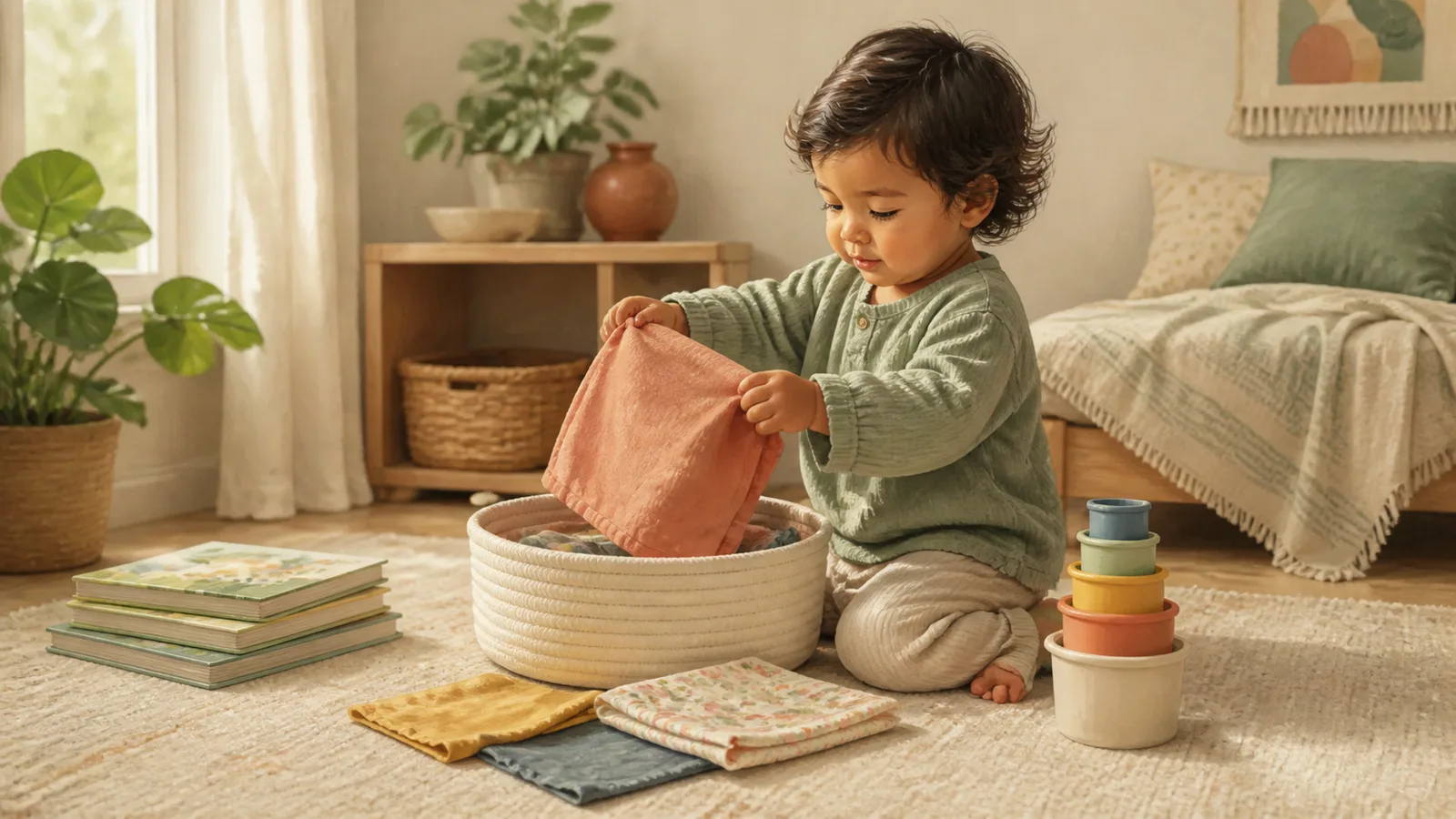
Quiet play with a one-year-old is usually quiet material, not a quiet child. Choose objects that do not crash or beep, contain the scatter, and stay close enough to respond.
Seven contained ideas
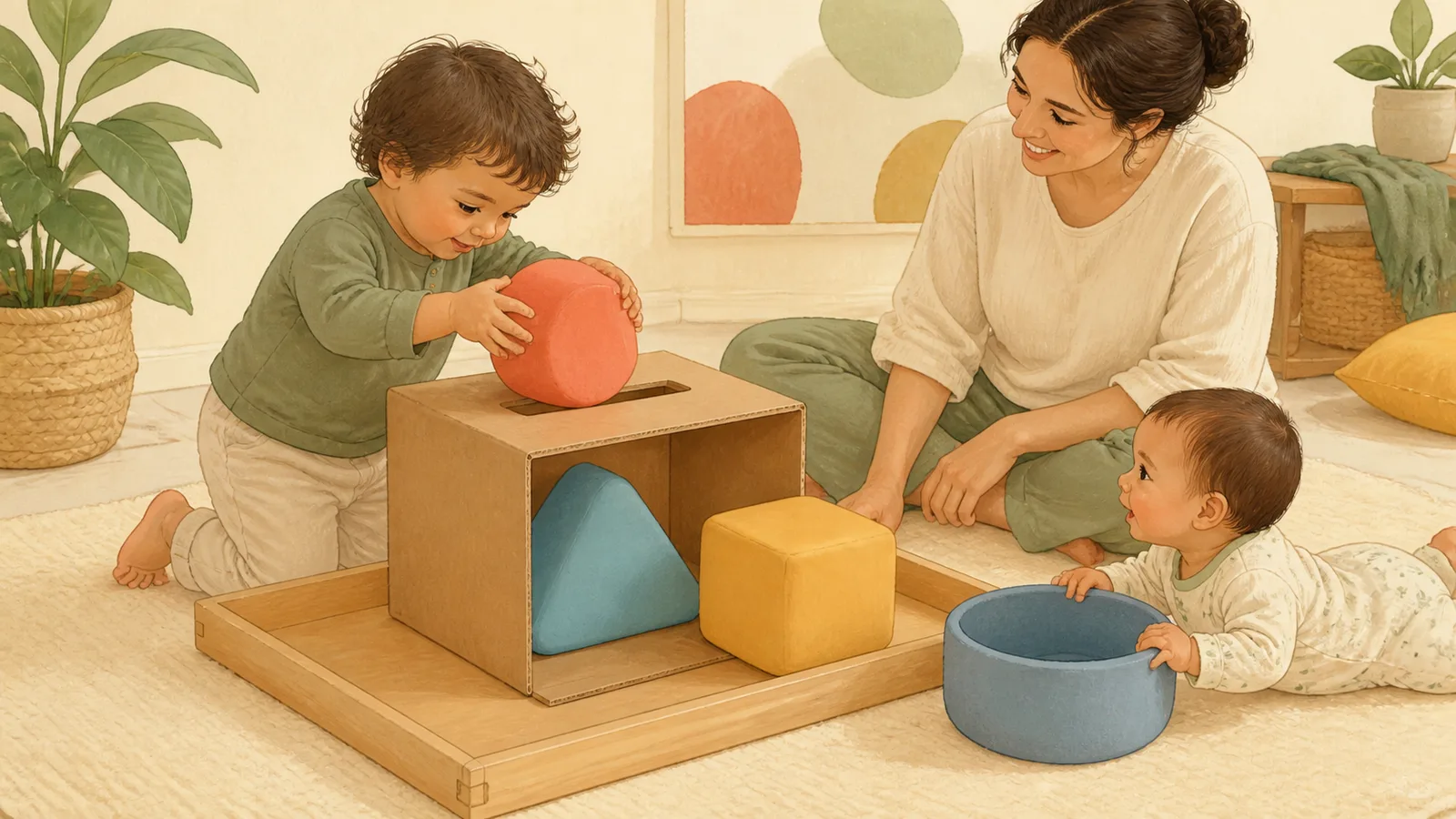
1. Large-cloth posting
Offer three clean fabric squares and a wide, smooth container. The child pushes them in and pulls them out. Avoid long strips, drawstrings and fraying fabric. The posting and container guide shows how to progress without unsafe DIY slots.
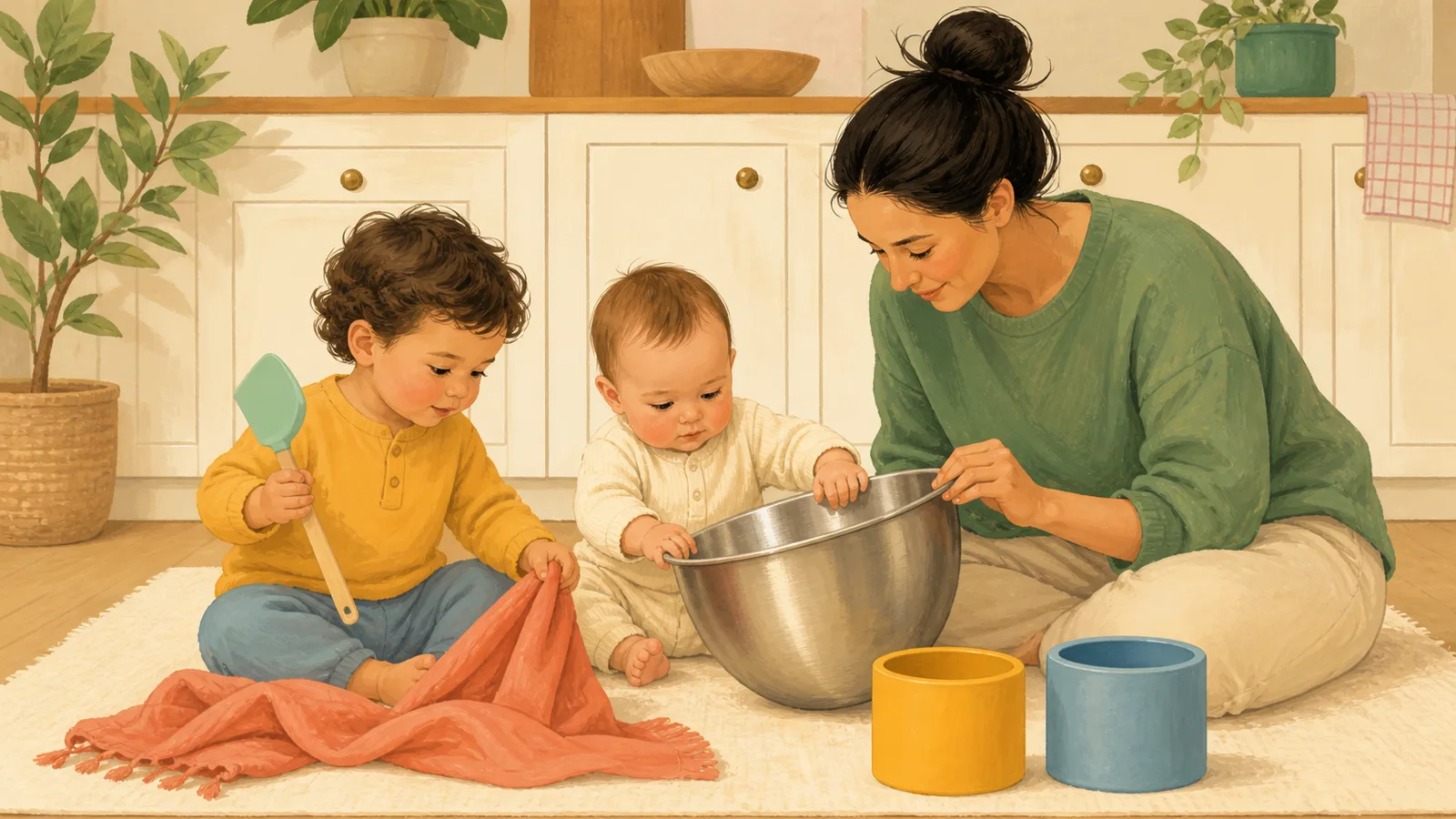
2. Nesting cups on a folded towel
The towel softens sound and marks the play zone. Demonstrate one cup inside another, then wait. Do not correct the order; filling and carrying are valid actions.
3. Two-book basket
Choose two sturdy books and sit beside the child. Let page turning, pointing and closing count. If chewing damages the binding, remove and replace the book.
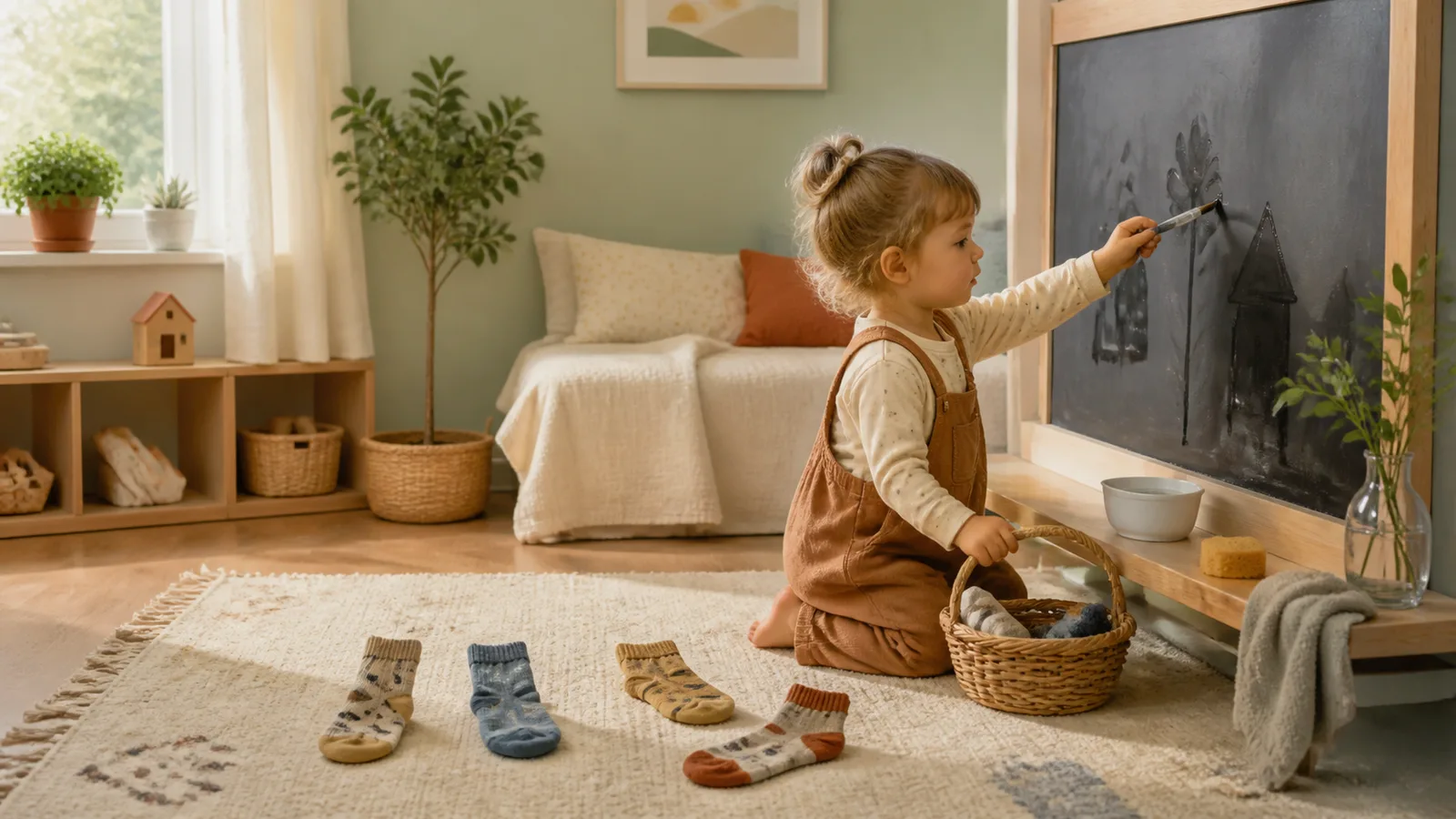
4. Sock transfer
Place four clean adult socks in one basket and an empty basket beside it. No sorting goal is needed. Count only if the child enjoys your voice.
5. Damp-cloth helper play
Offer a small damp cloth on a washable surface and model one wipe. The cloth should contain only water and remain supervised; keep cleaners entirely inaccessible.
6. Find the familiar object
Partly cover one large familiar toy with a cloth. Let the child uncover it. Do not cover the child or use loose material near sleep.
7. One-piece delivery
Place two baskets a few steps apart. The child carries one large block or soft ball between them. This adds movement without throwing.
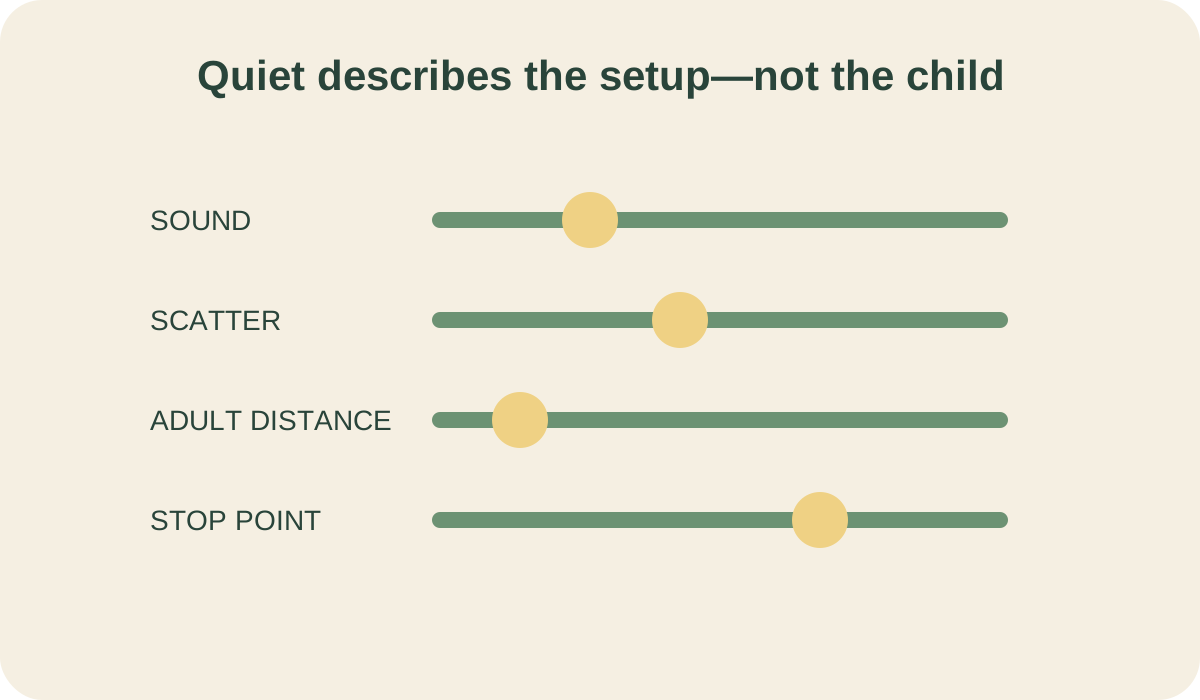
Rate the setup, not the attention span
| Variable | Quieter choice | More demanding version |
|---|---|---|
| Sound | Cloth, board book, nesting on towel | Wood on tile, metal bowls |
| Scatter | Three pieces in one tray | A full bin |
| Adult role | Sit nearby and narrate lightly | Repeated instructions and correction |
| Reset | One finished basket | Multiple sorted categories |
| Movement | Carry between two points | Throwing or chase game |
If the child leaves after two minutes, the activity worked for two minutes. Do not add more pieces to rescue it.
Quiet while another child sleeps
Prepare the zone before the nap: close gates, remove noisy objects, set water and caregiver supplies nearby, and choose an activity that allows interruption. A one-year-old still needs active supervision; “independent play” cannot mean the adult is unavailable in another room.
For slightly older toddlers, our low-mess two-year-old ideas add matching and simple pretend routines. The independence-through-play guide explains gradual adult distance without fixed-minute claims.
Safety pass
Skip internet activities using pom-poms, dry rice, beans, pasta, bottle caps, coins, clothespins, rubber bands or narrow-neck bottles for this age. Even when an adult plans to watch, a small object can move to the mouth instantly. Keep button batteries and magnets out of the entire play environment.
Household objects need the same screening as toys. Use our household-object safety checklist for cords, coatings, breakage, lids and cleanability.
Sources and research note
Activity choices draw on NHS baby and toddler play ideas, AAP toy-selection guidance, and NAEYC developmentally appropriate practice. Boundaries use CPSC guidance on toy safety, small parts, and button batteries.