The first repair step is not glue. It is removing the toy from play and deciding whether the failure is cosmetic, serviceable, or safety-critical.
Stop and identify
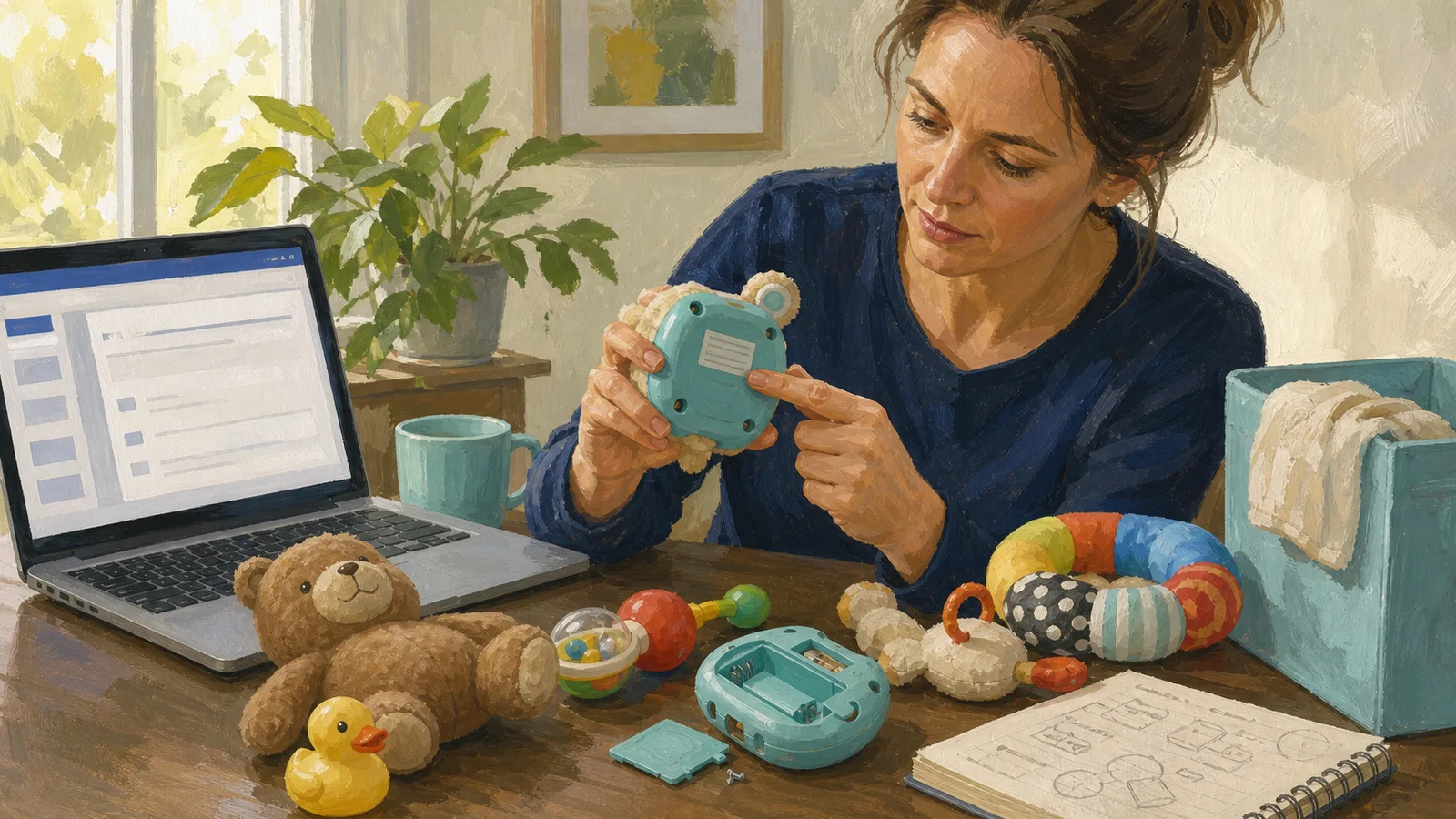
Collect every loose piece. Find the manufacturer, model, date code and instructions, then search the CPSC recalls database. If recalled, follow the official remedy; do not invent a home workaround.
Ask what load the failed part carried. A decorative sticker is different from an axle, climbing rung, ride-on wheel, seat restraint or handle. If identity or intended assembly is unknown, uncertainty itself can be a reason to retire a complex toy.
The repair triage
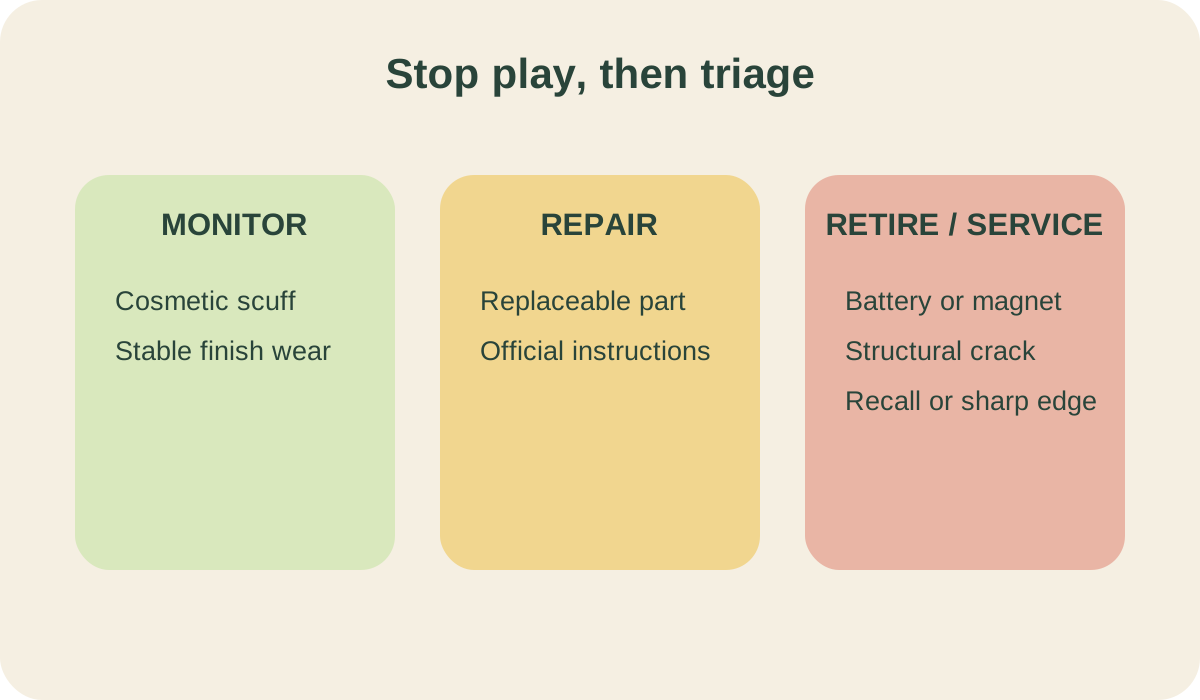
Usually cosmetic
Stable discoloration, a superficial scuff or a missing nonfunctional decoration may not affect use. Confirm that the finish is not flaking, sticky, sharp or exposing unknown material. Monitor it.
Potentially serviceable
A manufacturer-supplied wheel, knob, fabric cover or battery door may be replaceable with the specified part and instructions. Simple adult repair can be appropriate when it restores the original design and does not introduce small parts, sharpness or chemical exposure.
Stop use and seek service or retire
- accessible or missing magnets;
- a battery door that no longer secures with its intended fastener;
- corrosion, exposed wire, heat marks or liquid inside electronics;
- a structural crack, loose load-bearing joint or damaged ride-on;
- splinters, sharp plastic, broken springs or protruding metal;
- peeling unknown or older coating;
- mold inside porous material or inaccessible cavities;
- a recall or missing safety component.
Young children mouth toys, so a repair that “holds on the shelf” may still fail under biting, banging and throwing. See our baby mouthing safety guide when assessing shared toys.
Why common fixes can fail
Household glue varies in chemistry, strength, cure conditions and compatibility. A neat surface bond may conceal a crack that reopens under torsion. Tape degrades, detaches into a small part and does not recreate a screw-secured battery compartment. A random screw can protrude, split wood or alter a moving clearance.
Painting over damage does not restore structure and can introduce an unsuitable coating. Sanding suspect old paint can create lead-containing dust; CDC advises preventing exposure to suspect consumer products rather than disturbing them casually.
This does not mean repair is bad. It means safe repair is product-specific.
A return-to-play check
After the permitted repair has fully cured or been installed:
- compare assembly with the instructions and product images;
- count parts and confirm every fastener is seated;
- run a clean cloth over edges to catch burrs or splinters;
- pull, twist and operate the repaired area as an adult without a child present;
- check adjacent parts for stress that caused the original failure;
- clean according to instructions;
- return it only to the age group on the label.
Do not exceed manufacturer testing or put body weight on a toy unless that use is explicitly intended. A repair journal photo and date can help adults monitor the area.
Involve children without giving them the hazard
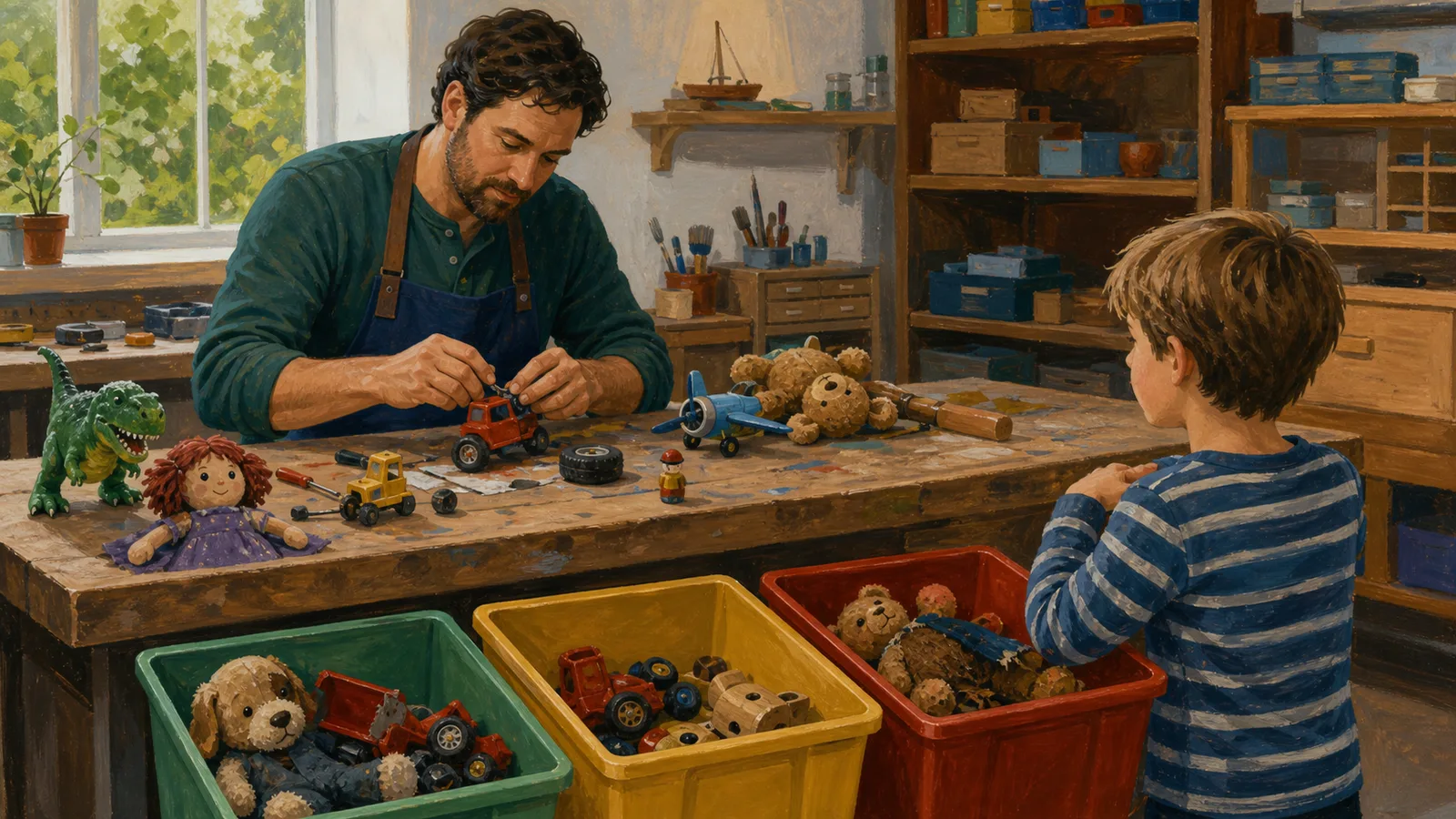
An older child can diagnose why something failed, sketch a replacement idea or contact a manufacturer with an adult. Keep tools, adhesives, batteries, magnets, blades and broken fragments under adult control. The learning can continue even if the product cannot.
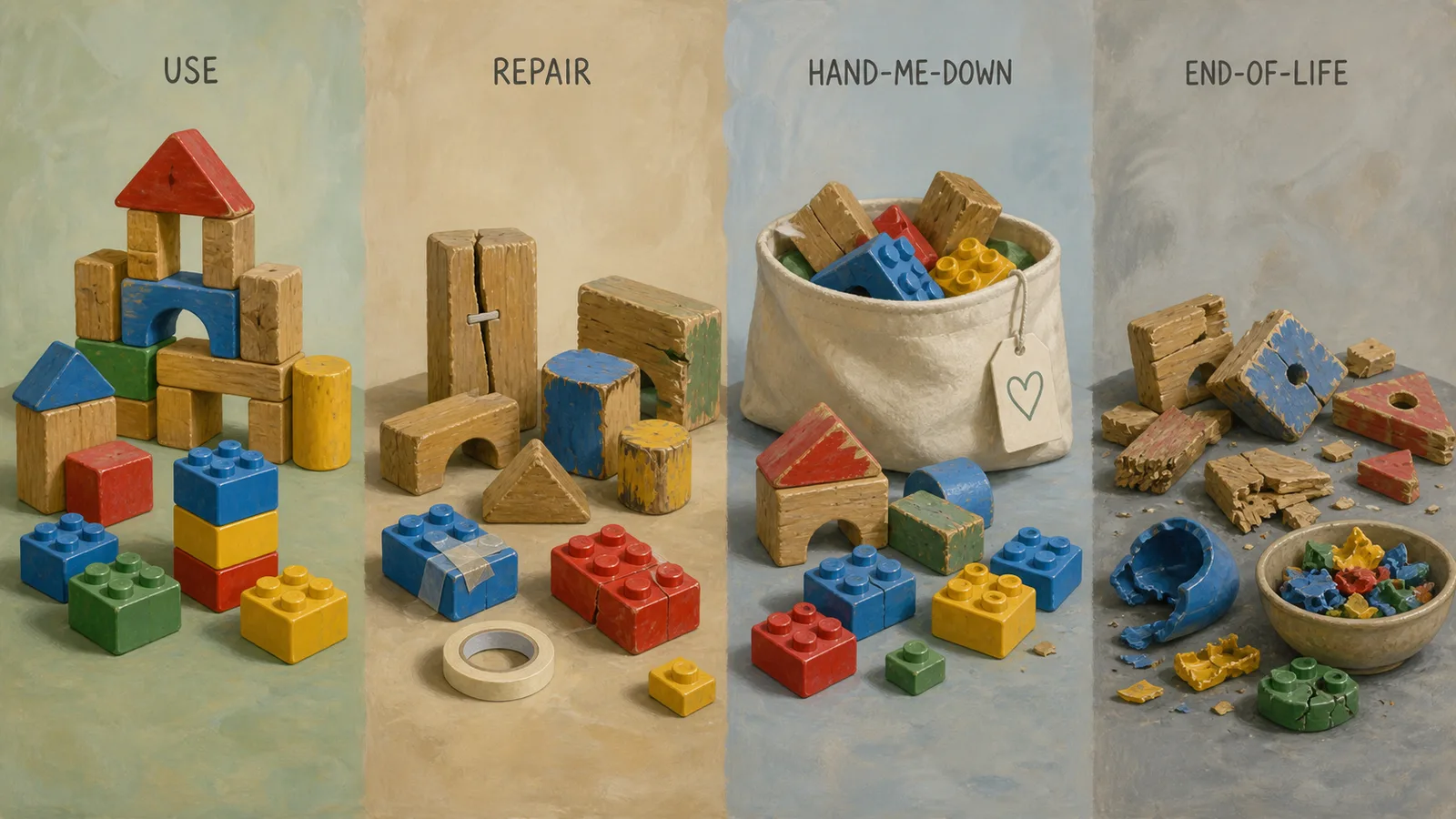
That systems perspective connects naturally to our toy life-cycle guide for older kids. For cardboard inventions where failure is expected and consequences can be kept low, use the cardboard engineering challenges instead of practicing on a safety-critical toy.
Frequently asked questions
Can a cracked plastic toy be glued?
Often it should be retired. Polymer type, load and internal damage are difficult to assess, and the crack may reopen sharply. Ask the manufacturer about a replacement part.
Can I seal chipped wooden-toy paint?
Not without identifying the product, coating and cause. Remove it from use and seek manufacturer guidance, especially for older or unknown paint.
Is it wasteful to discard an unrepairable toy?
Keeping a known hazard in play is not sustainable. Salvage only parts that can be managed safely outside children’s access and use local disposal guidance.
Sources and research note
Critical hazard categories come from CPSC guidance on toy safety, button batteries, magnets, and small parts. Coating cautions draw on CDC lead guidance. Repair decisions must follow the specific manufacturer and any recall remedy.