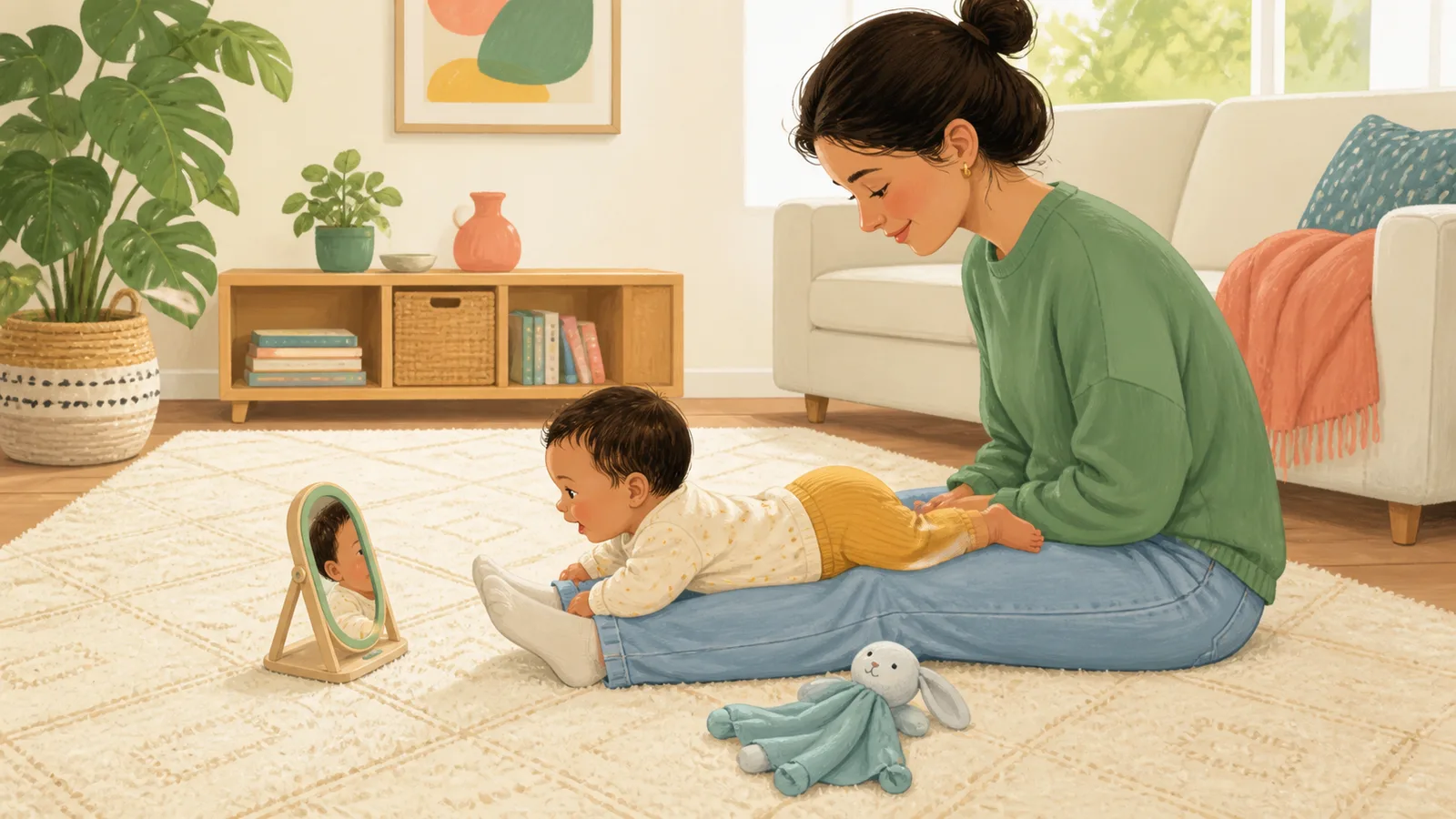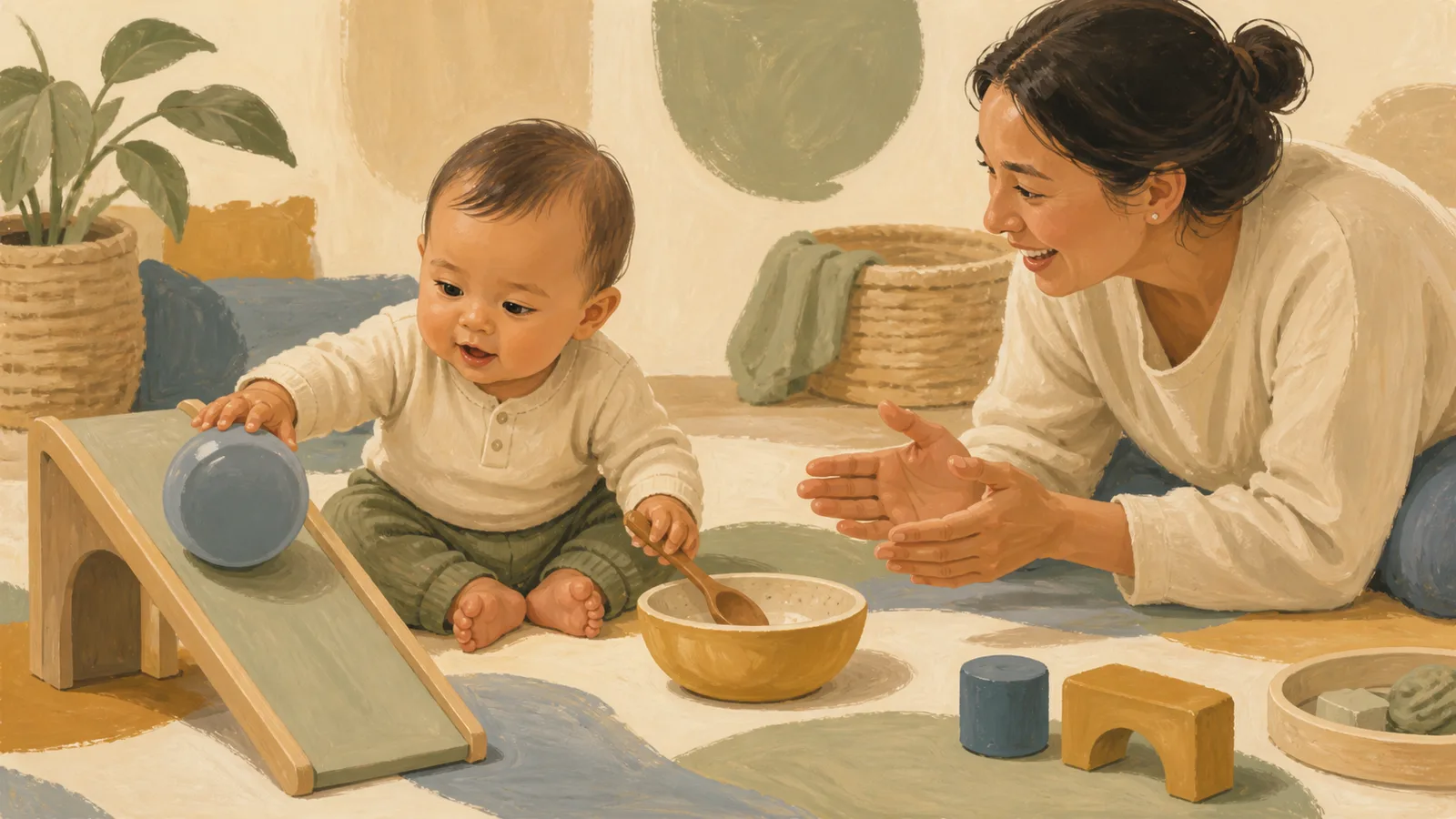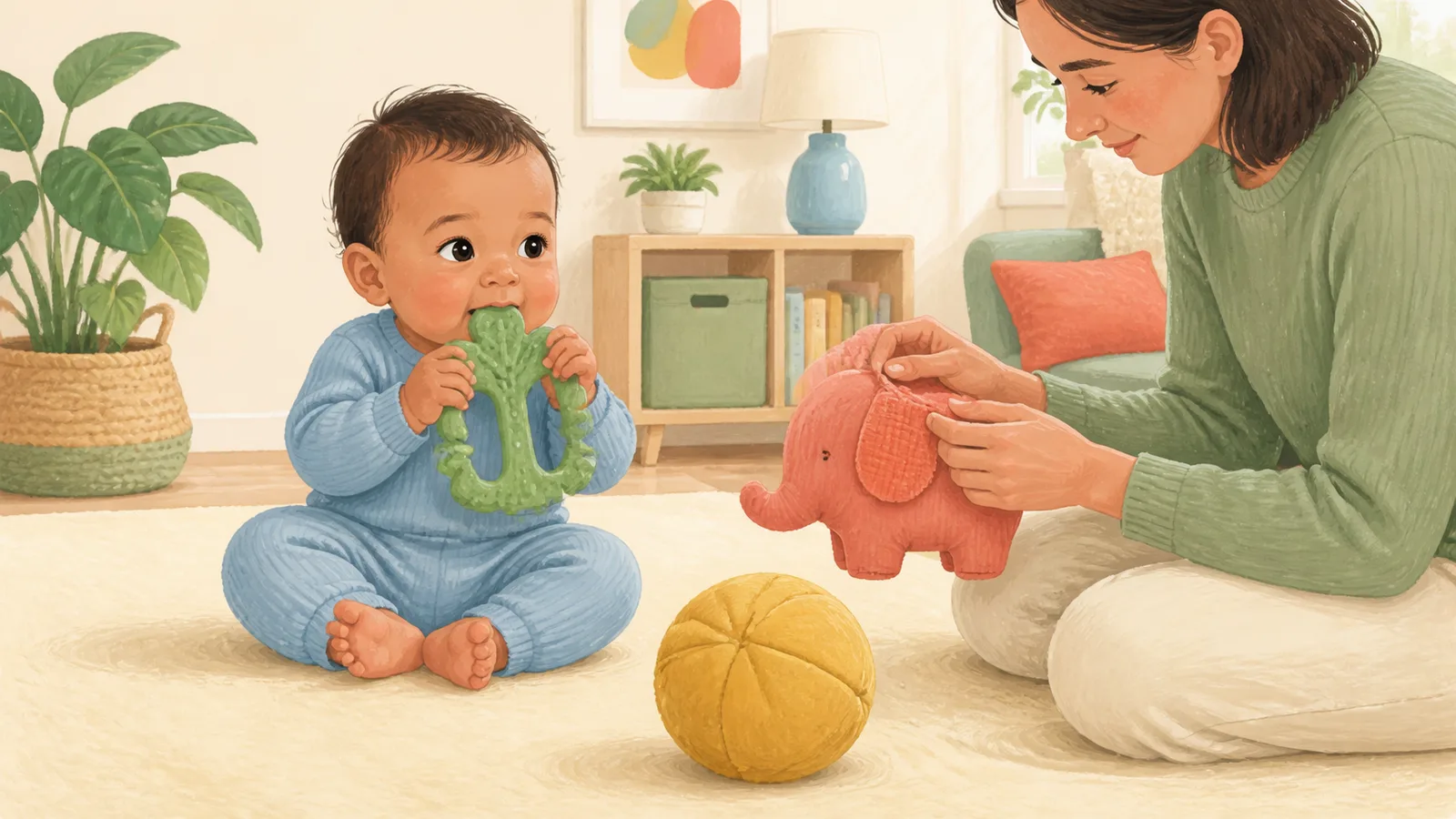
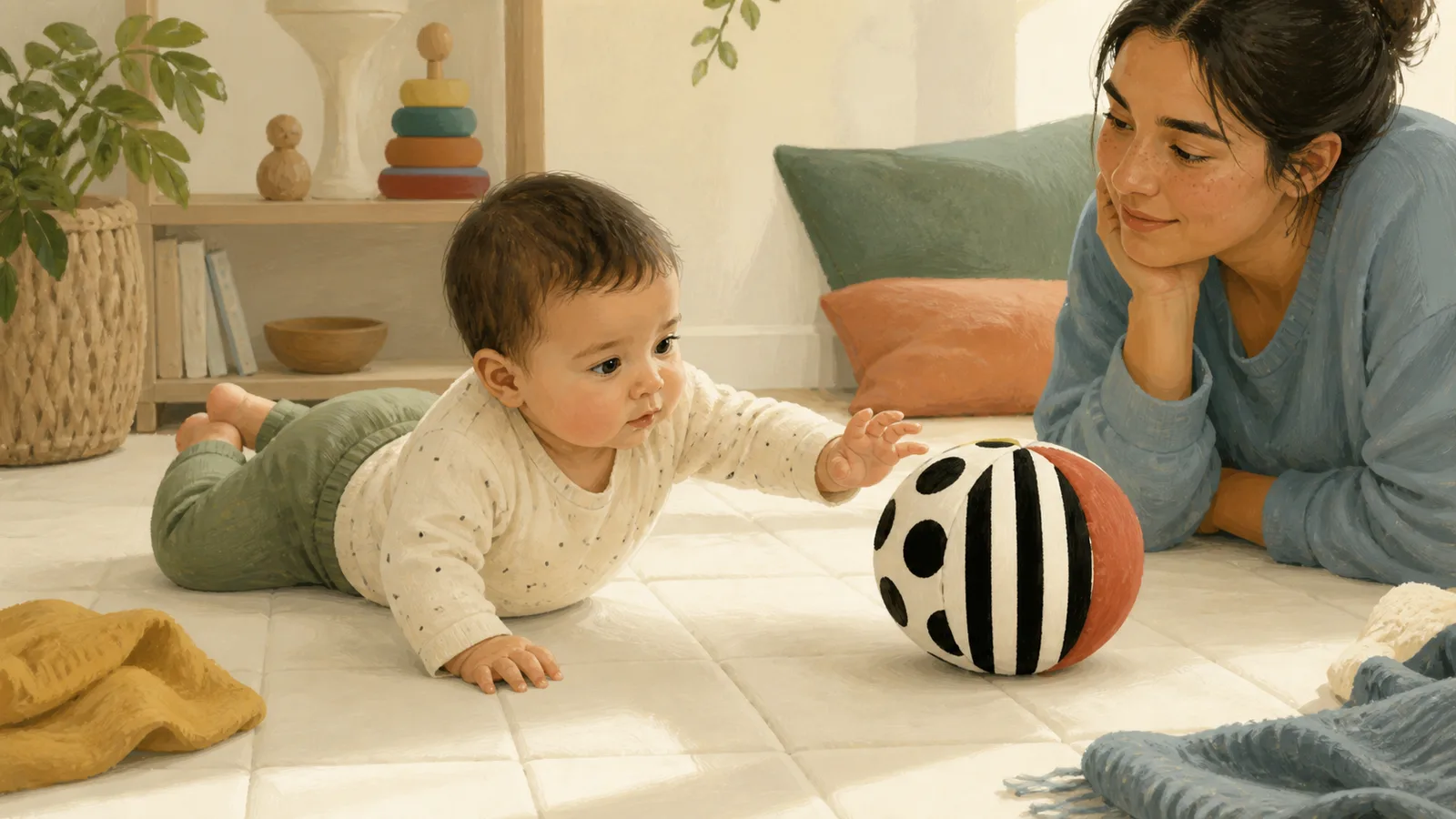
A clean floor offers something many baby seats cannot: room to turn the head, kick, reach, shift weight and change direction. The setup can be one firm mat, one safe object and your face.
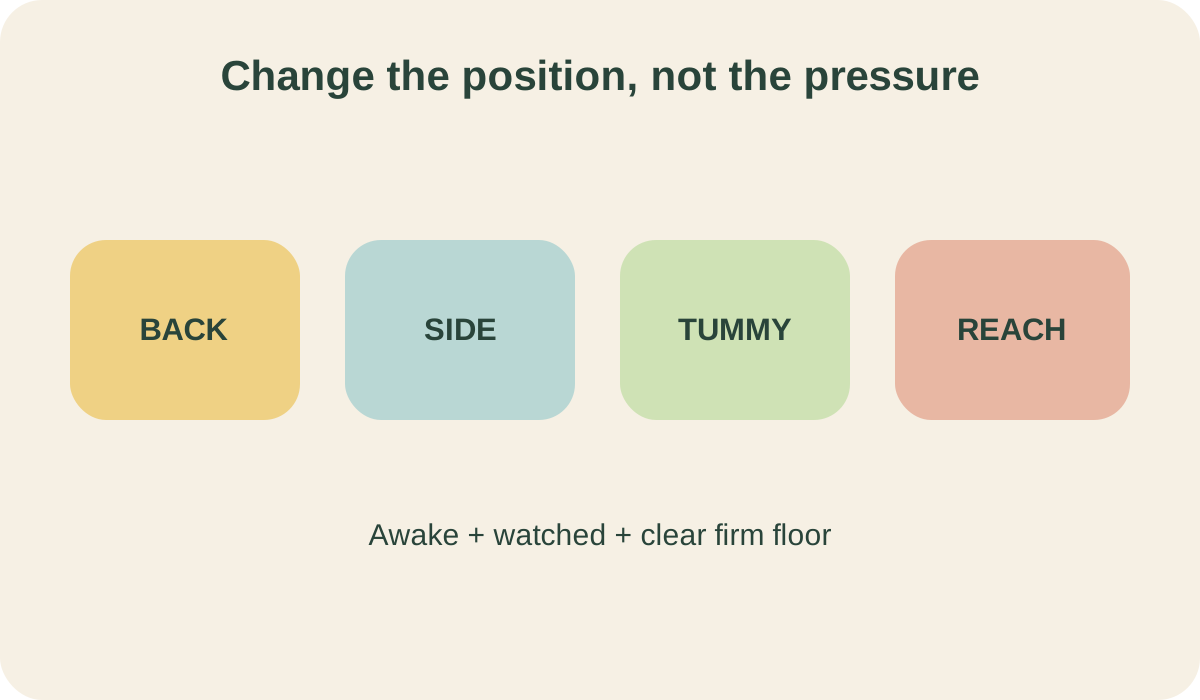
Prepare the floor
Choose a firm, level area away from stairs, pets, cords, heaters, furniture that can tip, dropped pills, button batteries, magnets and older children’s small pieces. Get down to floor height and inspect beyond the mat—the reachable zone will expand.
A thin washable mat or blanket can define the area. Deep cushions, beanbags and soft loungers make movement and breathing observation harder and are not floor-play surfaces. Stay present and awake.
Ideas by position
On the back
Bring your face into view and slowly move side to side. Pause so the baby can look away and return. Offer one lightweight graspable toy at the center line, then slightly to one side. Avoid hanging objects that can detach or cords that enter reach.
Side-lying
Side-lying can bring the hands together and make reaching easier. Position the baby on a firm surface and remain beside them; use your leg or hand as support rather than loose props around the face. Alternate sides.
Tummy time
Place yourself face-to-face, use a rolled towel under the chest only as current pediatric guidance and the baby’s clinician allow, or try chest-to-chest. Short, repeated awake periods count. The full tummy-time guide offers several positions for babies who protest.
Reaching across the body
Place one interesting object near a shoulder or hip rather than directly overhead. Let the baby decide how to reach. Do not pull an arm or force a roll.
Rolling space
When rolling begins, clear a wider area and place a familiar toy to the side. Babies can surprise caregivers with a first roll, so elevated beds and sofas are poor play surfaces. If the baby rolls during sleep, follow current safe-sleep guidance from the child’s clinician and official sources; do not add positioning devices.
Pivot and early crawl
Place two large safe objects in a shallow arc. A caregiver can sit as the third destination. Remove rugs that bunch and objects that slide unpredictably.
One toy is often enough
Try a soft high-contrast cloth book, large lightweight ball, simple sealed rattle, safe mirror designed for floor use, or one first block matched to the child’s age. Check every item for damage and recall status. Babies explore with mouths; our mouthing guide covers size, batteries, magnets and hygiene.
Cause-and-effect does not require an electronic panel. A kick that moves fabric or a hand that rolls a ball creates a visible result. Explore more examples in cause-and-effect play for babies.
A five-minute floor loop
- Begin face-to-face on the back.
- Offer one object at center.
- Move it slightly to one side.
- Change to side-lying or tummy if the baby is comfortable.
- End with a cuddle or care routine before distress escalates.
Five minutes is an example sequence, not a prescription. Follow awake time, feeding, health, temperature and cues.
What floor play cannot promise
Floor time provides movement opportunities, and pediatric guidance recommends supervised tummy time. It does not guarantee a milestone date, prevent every flat spot or replace evaluation for asymmetry, unusual stiffness/floppiness, feeding difficulty or delayed skills. Bring concerns to the child’s healthcare professional.
Outdoor floor play has extra variables—shade, heat, air and ground hazards. Use the outdoor play for babies site check before moving the setup outside.
Sources and research note
Position and activity guidance comes from AAP resources on how active babies are, tummy time, and back to sleep, tummy to play, plus NICHD Safe to Sleep, CDC infant physical activity, and WHO movement guidelines. Individual medical advice belongs with the baby’s clinician.