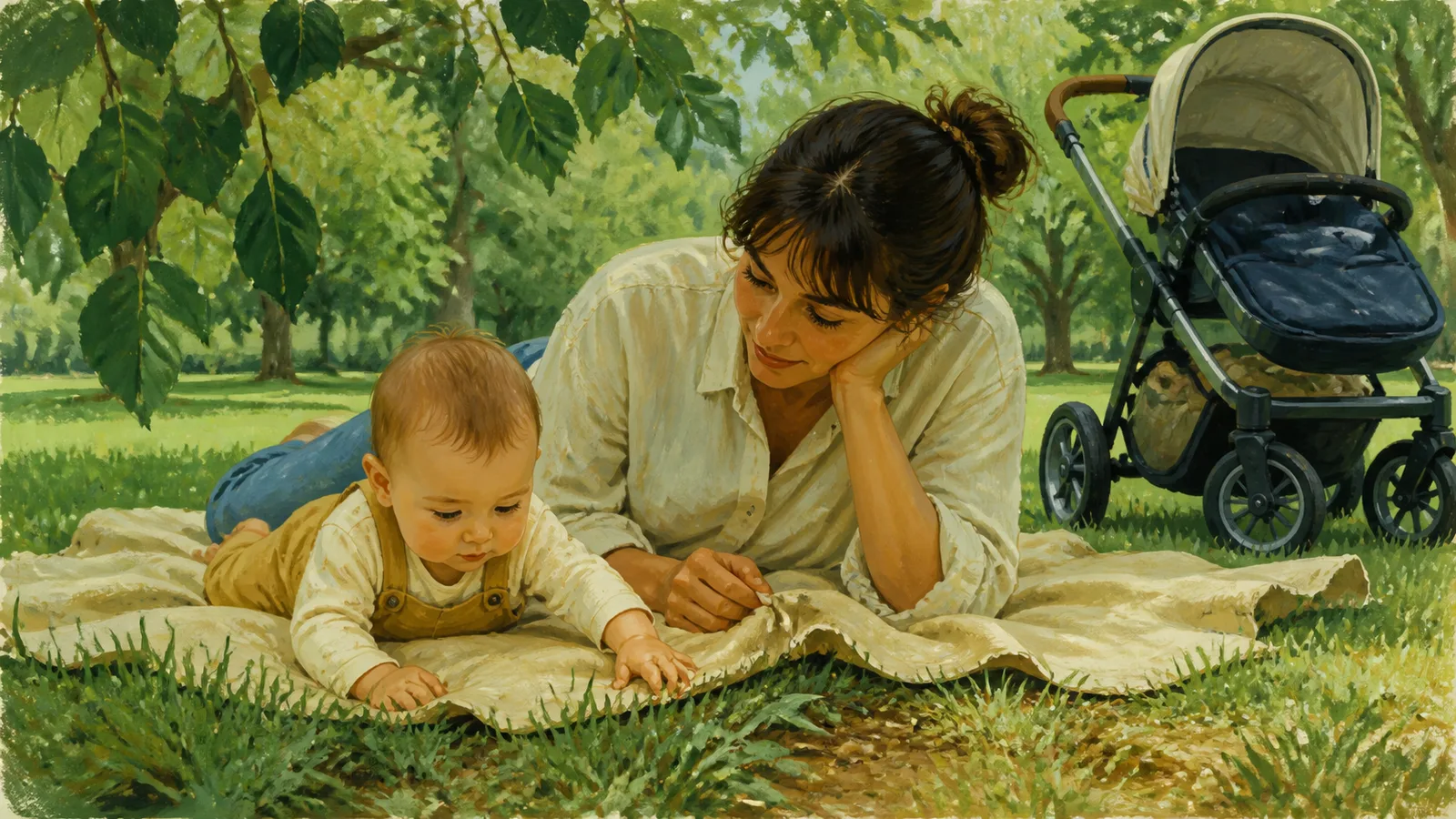
Outdoor play for a baby can be five quiet minutes in open shade: watching leaves, feeling moving air, hearing birds, or reaching toward the edge of grass. It does not require an activity station, and it should end when the environment or baby says it is time.
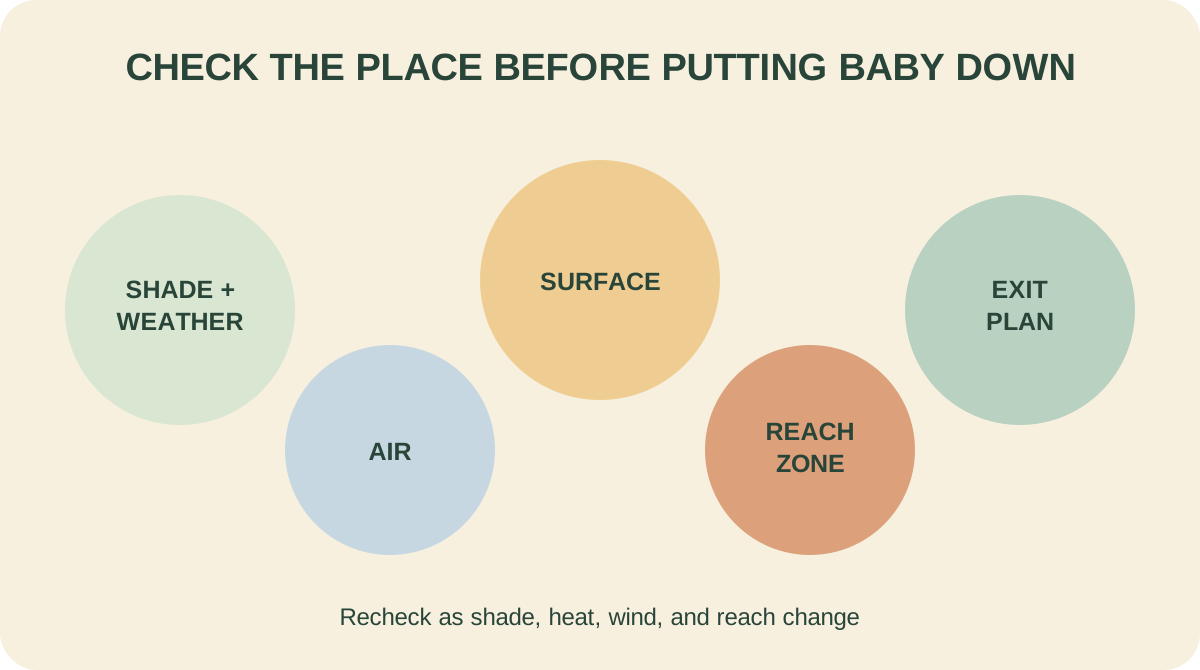
The five-point site check
1. Shade and weather
Find open shade with airflow. Check forecast, temperature, humidity, wind, lightning risk, and how conditions will change. Babies depend on adults to prevent overheating and sunburn.
2. Air
Check local air-quality guidance when smoke, ozone, dust, or pollution is possible. Move indoors when official recommendations or the baby’s health plan call for it.
3. Surface
Touch the exact ground, blanket, bench, buckles, and nearby metal with your hand. Inspect for pesticides, fertilizer, animal waste, glass, thorns, splinters, hot rubber, standing water, and unstable slopes.
4. Reach and mouth zone
Remove pebbles, mulch, berries, mushrooms, cigarette waste, caps, insects, plant fragments, and any unknown object within reach. A blanket boundary does not stop a rolling or crawling baby.
5. Exit plan
Know where shade, water for the caregiver, indoor cooling, handwashing, and transport are. A short session is easier to end early than a setup carrying ten toys.
Ideas by position
Carried or reclined with an adult
Walk slowly through shade and pause under moving leaves. Describe one sound or change. Ensure carriers are used according to instructions, the airway remains visible, and the baby is not overheating.
Chest-to-chest or lap
Sit securely in shade and let the baby look over your shoulder or toward a tree canopy. This can be an outdoor alternative when floor tummy time is frustrating.
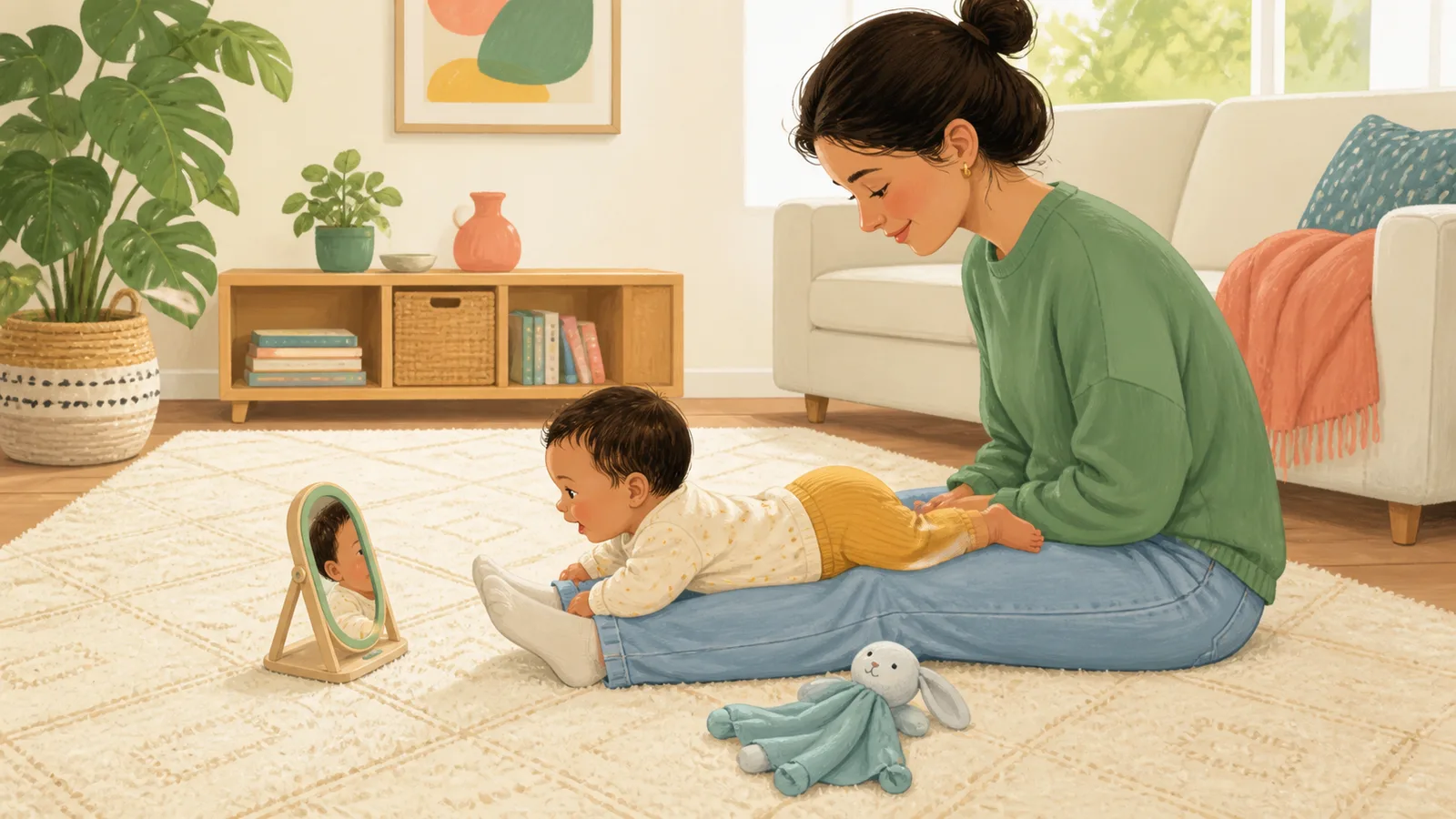
Supervised tummy time
Use a firm blanket on a level clean surface. Position your face or one high-contrast object within comfortable view. Grass may be uneven and distracting; the blanket gives a predictable base while still allowing outdoor sights and air.
The tummy-time guide provides several awake positions and makes clear that sleep remains on the back in a safe sleep space.
Supported sitting
Place one large leaf still attached to a safe plant just beyond reach for looking, or offer one age-suitable outdoor toy. Avoid propping with loose cushions that can tip or cover the face.
Rolling or crawling
Create a short route between caregiver and a large familiar ball. Re-inspect beyond the blanket because the reachable area changes quickly.
Sun protection
The AAP advises keeping babies younger than 6 months out of direct sunlight and using shade and protective clothing. Pediatric guidance on sunscreen for small exposed areas can depend on age and circumstances, so follow current advice from your child’s healthcare professional and product instructions rather than using outdoor play as sun exposure practice.
Shade moves. Recheck it during the session. Reflected light and heat can still matter near water, sand, pavement, and light walls.
Heat: do not cover the stroller
A blanket draped over a stroller can reduce airflow and trap heat, even when intended as sun protection. Use the stroller’s designed canopy and move the whole stroller into open shade. Keep the baby’s face visible.
Watch for unusual sleepiness, irritability, hot or flushed skin, rapid breathing, feeding changes, fewer wet diapers, or other signs of illness. Move to a cooler place and seek medical guidance promptly when concerned. Never leave a child in a vehicle, even briefly.
Grass, sand, leaves, and mouthing
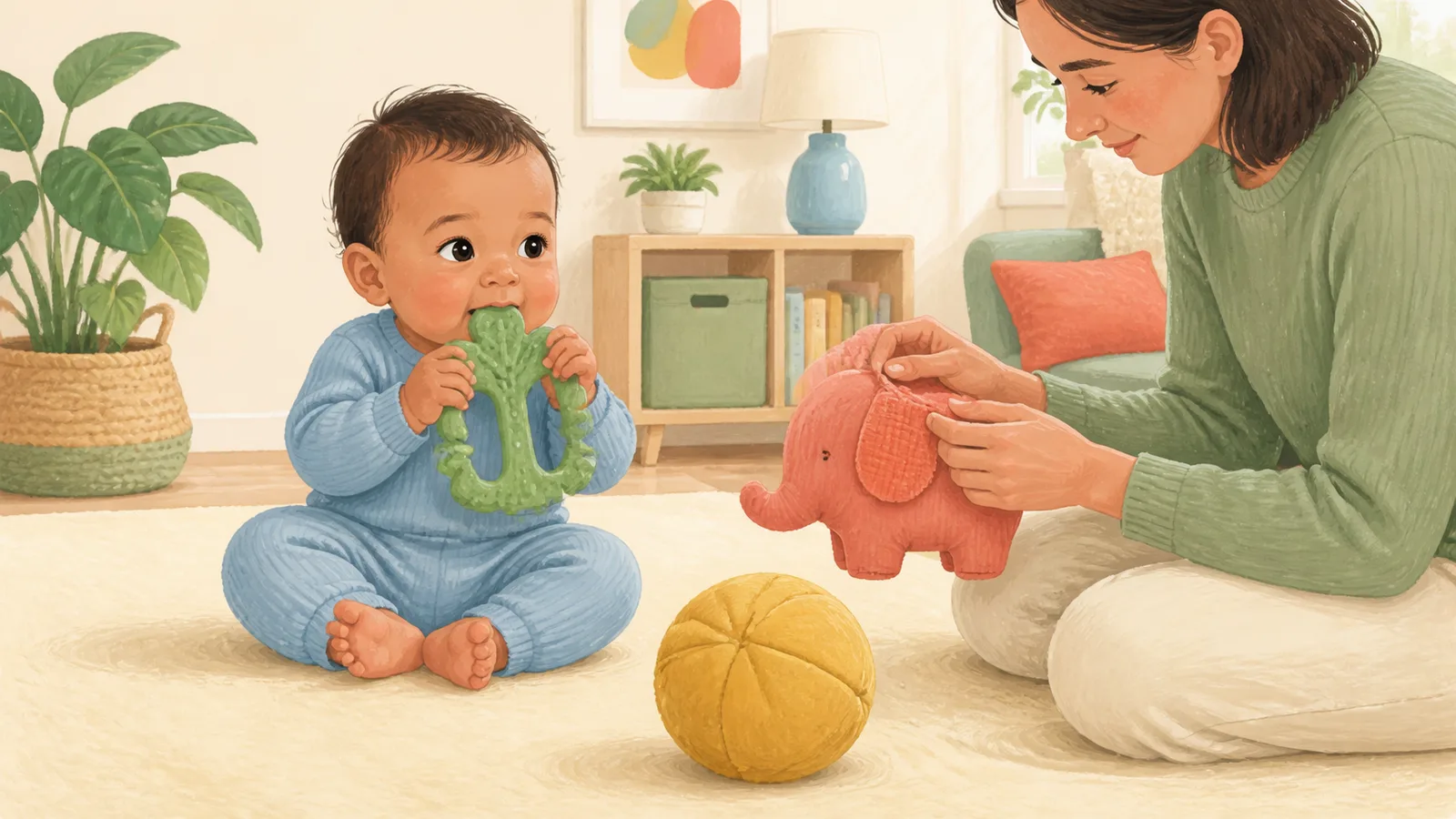
Touching a clean grass edge with supervised hands can be interesting. Mouthing unknown plants, soil, sand, mulch, stones, or sticks is not the goal. Redirect to a known safe teether and wash hands after ground play.
The guide to why babies mouth toys explains why supervision does not make ingestion hazards harmless. For planned textures indoors, use the safety boundaries in our sensory-play guide.
Avoid wild-plant tasting activities. Adults can misidentify plants, and parks may be treated with chemicals or contaminated by animals.
What to bring—and leave behind
Bring one washable blanket, one familiar large toy, weather protection, and the supplies already needed for care. A mirror can become hot or reflect sunlight; use only a toy designed for babies and monitor placement. Avoid loose balloons, water beads, small natural treasures, cords, plastic bags, and containers that collect hot water.
Outdoor sound is often enough. If you add music, keep it low so caregivers can hear the baby and surroundings. Responsive baby music play works with voice alone.
No fixed number of minutes
Search results often offer duration targets, but a universal number ignores climate, UV, air quality, shade, clothing, health, and the baby’s state. Begin briefly, stay close, and leave while everyone is comfortable.
Outdoor play is not a treatment or developmental race. A window, porch, sheltered doorway, or indoor observation of rain can provide natural variation when going out is unsafe or exhausting.
Frequently asked questions
Can a newborn go outside?
Many newborns can accompany caregivers outdoors when health professionals have not advised otherwise, but direct sun, heat/cold, air quality, crowds, and feeding needs require planning. Ask the baby’s clinician about individual medical circumstances.
Is grass safe for tummy time?
Use a clean firm blanket over a level inspected area. Bare grass can hide sharp objects, waste, insects, chemicals, and small items, and may not give stable support.
Can I use a muslin blanket over the stroller?
No. Even thin coverings can restrict airflow and trap heat. Use the stroller canopy and open shade while keeping the baby visible.
What if my baby hates being on the ground outside?
Use lap, chest-to-chest, carrier, or stroller observation in a safe awake context. The sensory change may already be substantial; floor play can wait.
Sources and research note
Sun and heat guidance comes from the AAP’s Baby Sunburn Prevention, broader Sun Safety, and Summer Sun, Heat & Air Quality guidance. Air-quality context comes from AirNow’s guidance for children. Positioning and mouthing boundaries use AAP tummy-time and choking-prevention resources. This is general safety information, not individual medical advice.