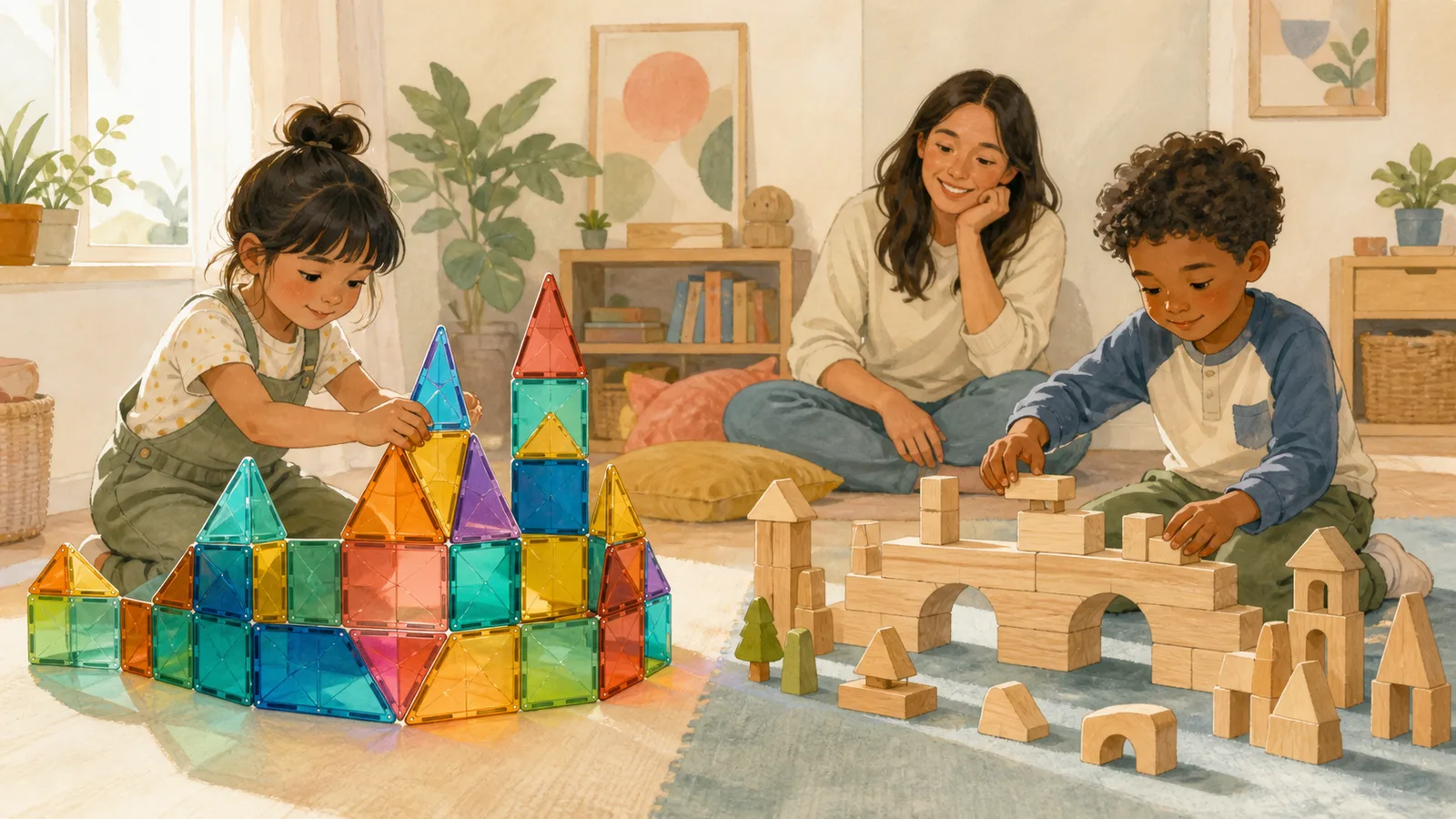
Choose magnetic tiles when a child wants fast vertical building, enclosed forms, light-through-color play, and structures that can be lifted. Choose wooden unit blocks when they enjoy balance, weight, stable roads, bridges, and structures governed visibly by gravity.
Neither is more creative by default. The materials remove different difficulties and introduce different ones.
Side-by-side decision table
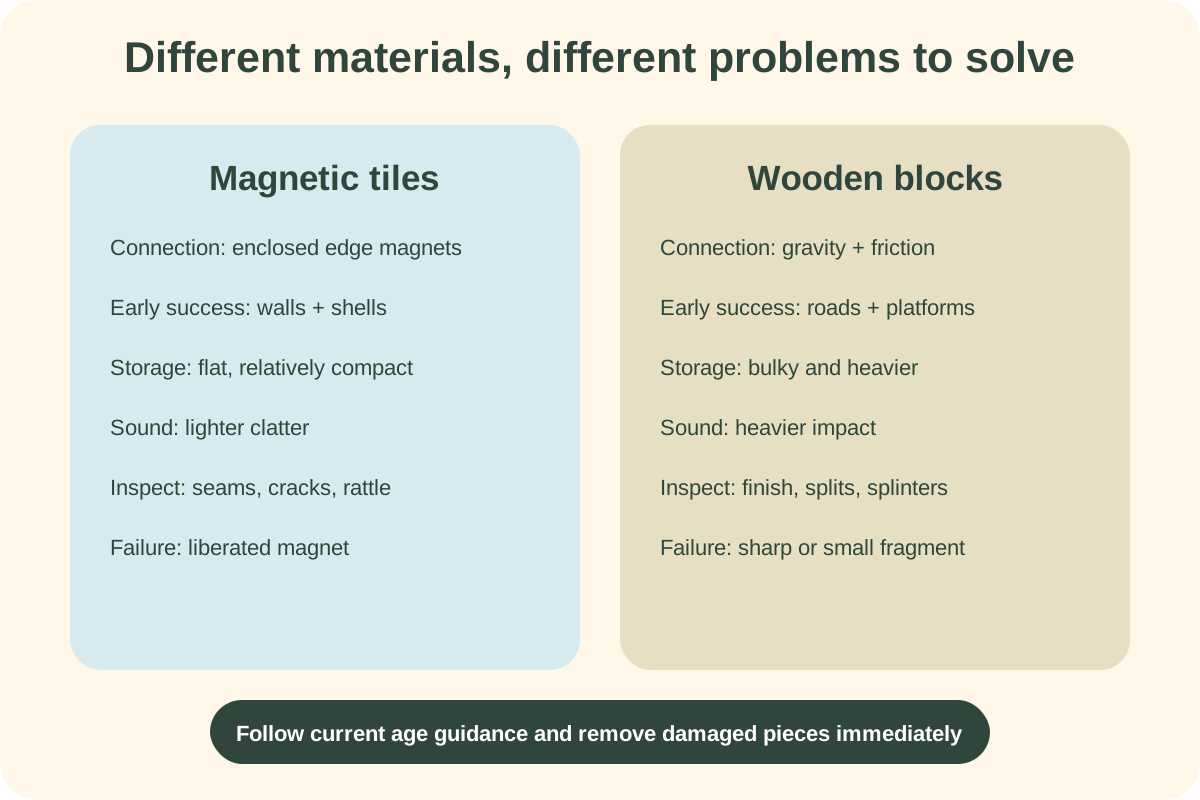
| Dimension | Magnetic tiles | Wooden unit blocks |
|---|---|---|
| How pieces join | Enclosed magnets hold edges | Friction, gravity, and surface contact |
| Easy early success | Vertical walls and roofs | Roads, rows, short stacks, platforms |
| Typical frustration | Polarity, weak angle, collapse when moved, too few panels | Wobble, precise balance, heavy collapse |
| Sound and floor impact | Usually lighter but can clatter | Heavier and often louder |
| Storage | Thin pieces nest compactly | Bulkier volume and heavier bin |
| Inspection priority | Cracks, separated seams, loose/rattling magnet | Splinters, cracks, peeling finish, warped faces |
| Failure consequence | A liberated magnet can be a severe ingestion hazard | Broken wood can splinter or create sharp/small pieces |
| Expansion | Brand dimensions and magnet placement may vary | Unit proportions can mix when scale matches |
Verify the exact product’s age label and instructions. Category comparisons cannot certify an individual set.
What building feels like
Magnetic tiles reduce the connection problem
Two edges meet and hold. Children can make walls before they have the balance required for a wooden wall of similar height. Panels can become cubes, pyramids, towers, garages, tracks, and color windows. A build may survive gentle relocation.
That convenience changes the problem rather than removing problem-solving. Children work with edge alignment, polarity, panel count, three-dimensional closure, and how to brace a tall form. They may also become frustrated when a roof’s pull collapses a wall or when attractive examples require far more pieces than a starter set contains.
Wooden blocks keep gravity in the foreground
Each piece rests where balance allows. Unit blocks use proportional dimensions that make relationships repeat: two shorter blocks can equal one longer block, identical supports can hold a span, and an arch creates a known opening.
Wooden structures tend to be stable as roads and platforms but cannot be lifted as one shell. A collapse is immediate feedback about base width, alignment, weight, or a moving floor. It is also noisy and can hurt when heavy blocks fall.
Safety: do not collapse all “magnet toys” into one category
Sealed magnetic tiles from established children’s-toy makers are different from loose high-powered magnetic balls sold as desk or construction sets. But the safety question remains serious: what happens if the enclosure cracks and a magnet is liberated?
The CPSC warns that swallowed high-powered magnets can attract across intestinal tissue and cause perforation, blockage, infection, and death. Stop using a magnetic piece if it is cracked, split, punctured, warped at a seam, missing a rivet, or rattling unexpectedly. Follow manufacturer disposal or warranty guidance; do not glue or tape it back into floor play.
Official MAGNA-TILES and CONNETIX pages state that their products comply with applicable safety requirements. Those are manufacturer claims, not LWT lab results. We did not independently test magnet strength, seam durability, chemical composition, or compatibility.
For wood, inspect corners, edges, finish, glued laminations, and cracks. Retire a block that splinters or releases a piece. Avoid soaking unless the maker permits it; swelling and warping can damage stacking surfaces.
Which works better in a small home?
Magnetic tiles usually store in a relatively narrow bin because panels lie flat. However, three-dimensional buildings consume many tiles, and children may want to preserve large hollow structures on the floor.
Wooden blocks take more storage volume and a full bin can be too heavy for a child to carry. They also transmit sound into hard floors and neighboring rooms. A rug reduces impact noise but changes rolling and precision.
For a very small apartment, choose the material that matches the child’s repeated play and limit accessories. A 60-piece tile set and a small vehicle basket may be more usable than three incompatible construction systems. A tray or low board can define one project-save zone.
Which lasts longer?
Well-made unit blocks can last for decades when surfaces remain intact and pieces are not exposed to moisture. They have no mechanism to fail. Their finish will show dents and wear, which may or may not affect use.
Magnetic tiles contain multiple materials and enclosed magnets. Quality construction and inspection matter. A panel can remain useful for years, but a cracked enclosure changes the safety decision immediately. Manufacturers’ warranties and replacement policies vary and can change; check current terms rather than treating a historical warranty as part of the toy.
Longevity also depends on whether the system remains interesting. Both are genuinely open-ended. Neither needs a new themed set every season.
Cost without a volatile price table
Retail prices change too quickly for a durable comparison. Instead calculate usable build capacity:
- How many repeated squares, triangles, or unit blocks are included?
- Can a child build the kind of structure shown on the box without an immediate expansion?
- Are specialty pieces central or occasional?
- Is the set compatible with pieces already owned?
- Can damaged pieces be replaced individually?
- Will the storage container and floor space hold the useful set?
For magnetic tiles, panel count can disappear quickly into six-sided cubes. For wood, a modest set can make roads and platforms but may need more repeated units for large enclosures. Buy for the child’s current construction, not the most elaborate marketing image.
Mixed-age homes
Base shared floor play on the youngest child’s age and behavior. An older child may use a magnetic set labeled 3+ appropriately while a mouthing toddler cannot safely share access, especially because damage or a loose component may not be noticed immediately.
Wooden blocks suitable for the youngest child can sometimes be shared more easily, but weight and throwing still matter. Keep miniature blocks and accessories separate.
Use a high table, gated room, or scheduled session for age-inappropriate systems. Count pieces back into a closed box and inspect magnetic components before storage.
Who will probably prefer each system?
Magnetic tiles may fit a child who…
- wants quick height and enclosed forms;
- enjoys color, light, symmetry, and pattern;
- becomes discouraged by balancing every piece;
- likes to move a completed structure; or
- has floor space but limited storage depth.
Wooden blocks may fit a child who…
- builds roads, bridges, platforms, and landscapes;
- enjoys weight and precise balance;
- combines construction with figures and vehicles;
- wants a system that needs no connectors; or
- can manage the noise and lifting weight safely.
Some children use both together: blocks make stable foundations while tiles create walls. Confirm that mixed materials do not hide cracked tiles or put a younger child near an older-age system.
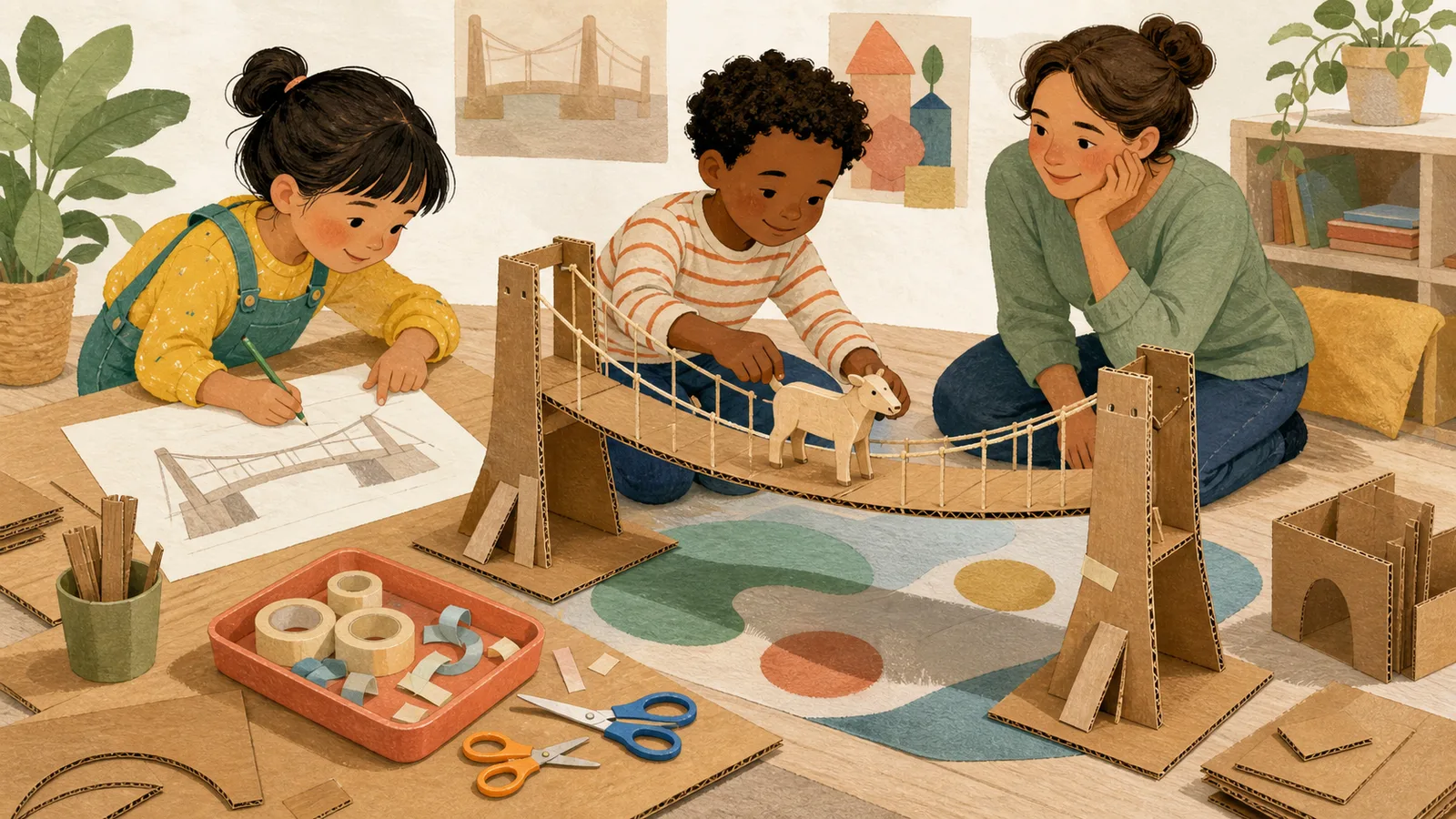
For verbal support, use spatial language that describes the actual build rather than declaring one material more educational. For an alternative using low-cost material, try our cardboard engineering challenges.
Frequently asked questions
Are magnetic tiles safe?
Use a set with current age grading from a traceable manufacturer, follow instructions, and inspect every piece. Intact construction is essential. Remove any cracked, split, punctured, or rattling tile immediately because liberated magnets can cause severe injury if swallowed.
Can magnetic tile brands be mixed?
Some makers say their sets work with other common brands, but dimensions, magnet position, strength, polarity, and warranty terms can differ. Verify current manufacturer guidance and expect mixed builds to behave inconsistently.
Are wooden blocks better for spatial skills?
Many block-play studies use wooden unit blocks, so the evidence base is more directly relevant to that material. It does not prove wooden blocks are superior to magnetic tiles; direct comparative research is limited.
Which set needs more adult help?
It depends on the child and build. Magnetic tiles reduce balancing but may require help with three-dimensional planning or collapsing roofs. Wooden blocks make simple roads accessible but tall structures demand control. Watch where help is repeatedly requested.
Can a child use both?
Yes, when both sets are suitable and intact. Offer one system first if mixed pieces create visual clutter or cleanup conflict, then add the second to solve a real building problem.
Sources and research note
Compare the wider material trade-offs in wood versus plastic toys and find age-adjusted prompts in building challenges by age.
Safety guidance comes from the CPSC toy center and magnets information center, plus AAP toy-selection guidance. Product-construction statements were checked against official MAGNA-TILES FAQs, the brand’s design overview, and CONNETIX FAQs. Developmental context comes from block-play research, including a randomized trial. LWT did not hands-on test, certify, rank, or compare specific sets.