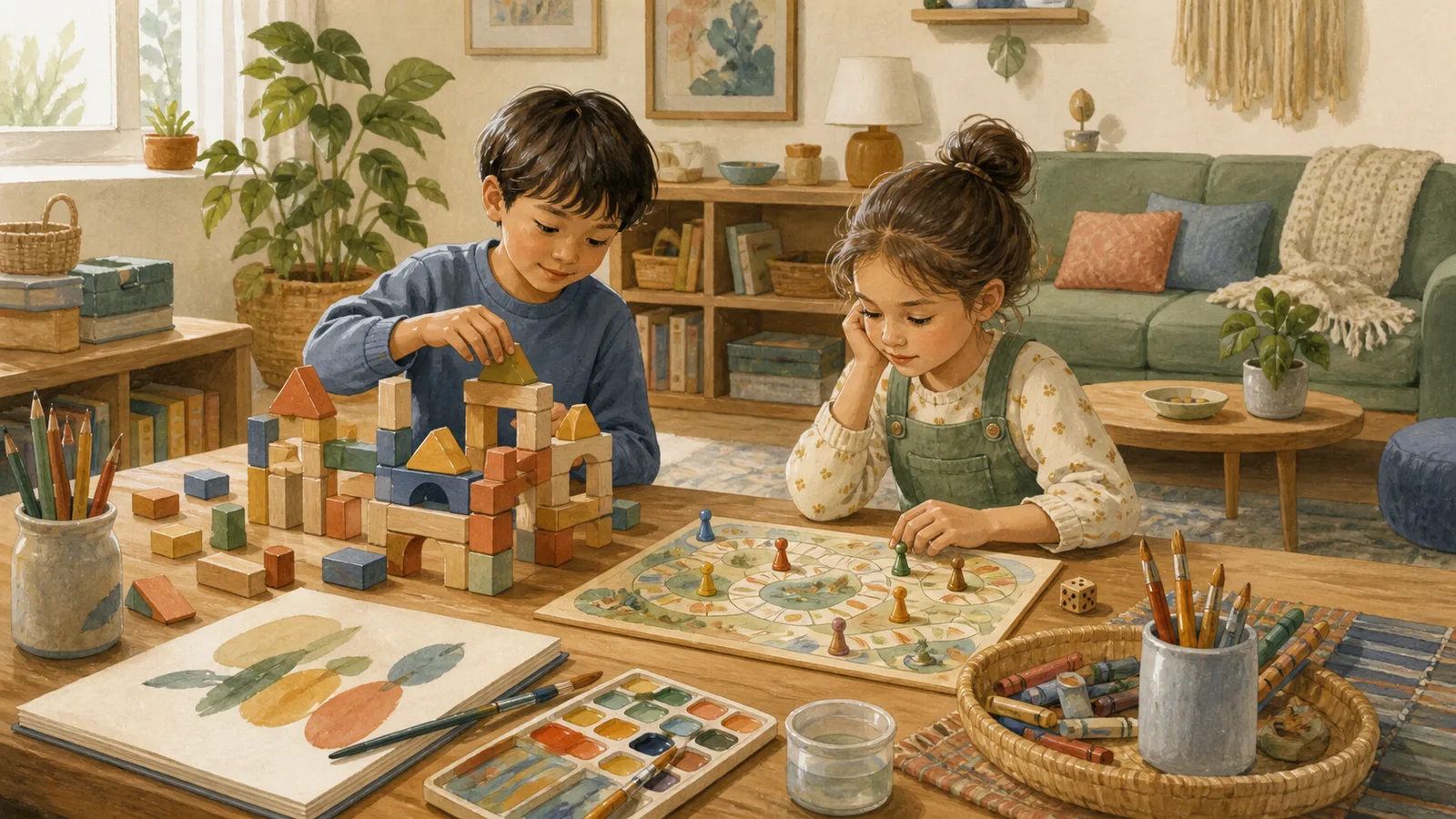
A five-year-old learning a first rule game and a seven-year-old designing elaborate worlds can both fall under one retail filter. A useful guide has to ask more than age.
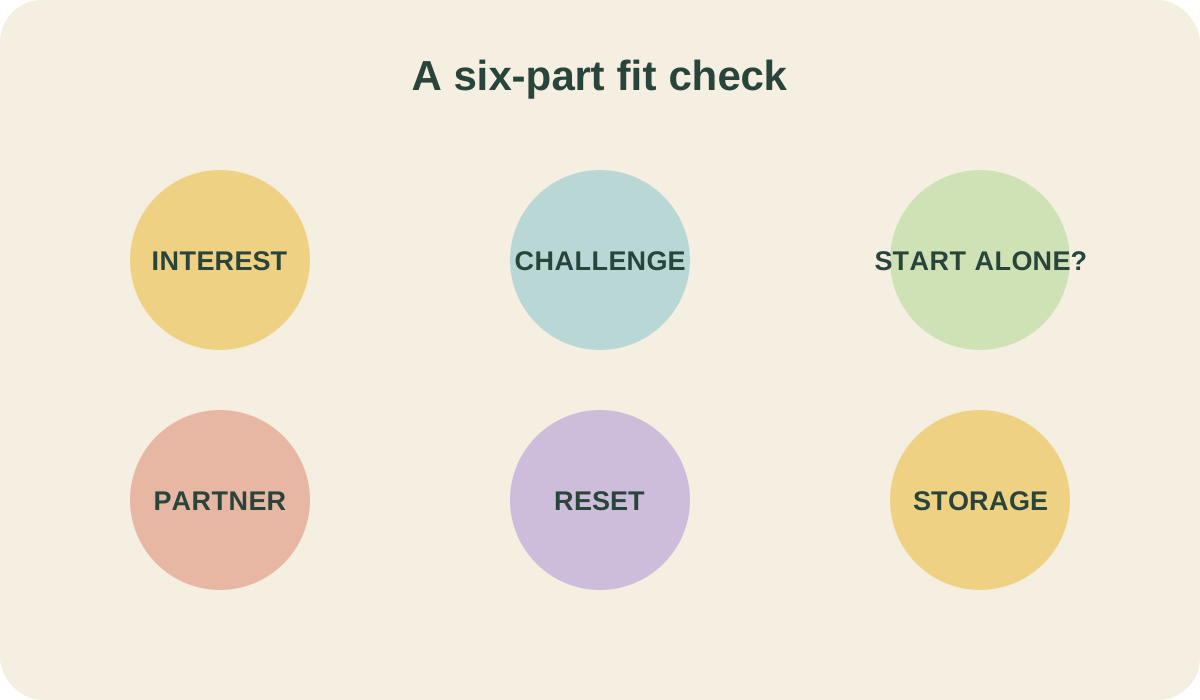
The six-part fit check
- Interest: What does the child choose without prompting?
- Challenge: Is there a reachable first success and room to deepen?
- Independent start: Can the child begin, or must an adult teach every session?
- Partner: Does it need a willing sibling, adult or group?
- Reset: Who sorts, charges, cleans or reorders it?
- Storage: Where do projects and small parts live?
Ask the caregiver about household boundaries and the child about current interests. Avoid gendered assumptions; interests are more useful than packaging color.
Construction gifts
Choose a system with enough pieces to make something meaningful, compatibility information and storage that supports iteration. A small expansion to an existing system may outperform a new incompatible set. For children ready for constraints, our building challenges by age shows how prompts can add depth without more pieces.
Trade-offs: loose parts migrate, younger siblings change storage needs, and displayed builds consume surface space.
Art and maker gifts
Usable materials—paper, quality washable paint, yarn, modeling material, tape, a sketchbook—often beat a single-result kit. Match tools to motor skill and provide an acceptable work surface. “Nontoxic” does not mean edible or unsupervised.
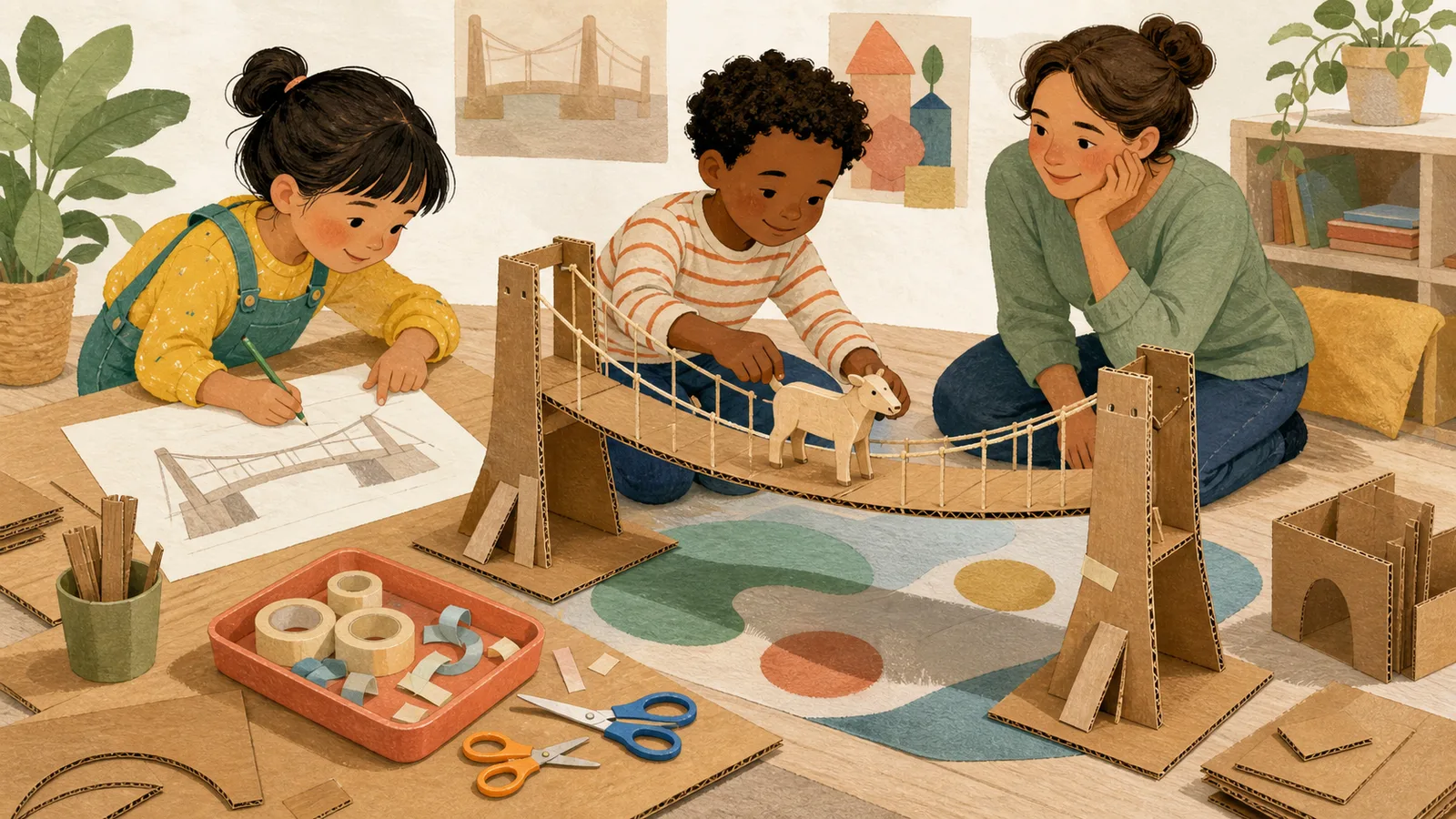
A kit can work when the theme is a strong interest and instructions are readable with available adult support. Avoid gifts that advertise a beautiful outcome but leave no room for choice. Try the open testing structure in our cardboard engineering challenges.
Games and puzzles
Check actual players, duration, reading load, losing experience and reset—not just the box age. A cooperative game can reduce direct competition but still require waiting and shared decisions. A solo puzzle is independent only after its rules are understood.
Research on board games and learning is varied and game-specific. Do not buy a game because a package promises broad intelligence. Our board-game learning guide explains mechanics and evidence limits.
Outdoor and movement gifts
Bikes, scooters, skates, balls and climbing equipment are site-and-safety systems, not standalone boxes. Confirm fit, protective equipment, traffic separation, storage and adult practice time. A simple jump rope or field markers may be better for a small home than a large ride-on.
If greater neighborhood freedom is part of the gift, use the outdoor independence readiness guide; a new device does not create route judgment.
Story, audio and knowledge gifts
Books and audiobooks can follow a specific fascination without adding complicated play pieces. Ask about reading level privately; interest age and decoding level are not identical. A reference book can become a maker tool when paired with a notebook or project.
Audio players bring content costs, headphones, privacy and ecosystem decisions. Review those in our screen-free audio guide.
Experiences and contributions
Lessons, performances, memberships and outings need dates, transport, equipment and a graceful exit if interest changes. Do not give an ongoing class that commits the household without asking. A contribution toward a child-selected goal can work when explained concretely.
For a child whose shelves are already full, see gifts for preschool and early-school homes with too many toys.
Budget versions
- Add a challenge deck to blocks already owned.
- Give a library date and a personally made bookmark.
- Refill one art material plus protected table time.
- Create a neighborhood map kit with clipboard and pencil.
- Repair or complete a favorite set with official parts.
The price should not be confused with developmental value.
Sources and research note
The fit framework draws on AAP toy-selection guidance, CPSC Age Determination Guidelines, NAEYC resources on guided play and STEAM, and a systematic review of board games and learning. Categories are editorial guidance based on public specifications and evidence, not product testing.