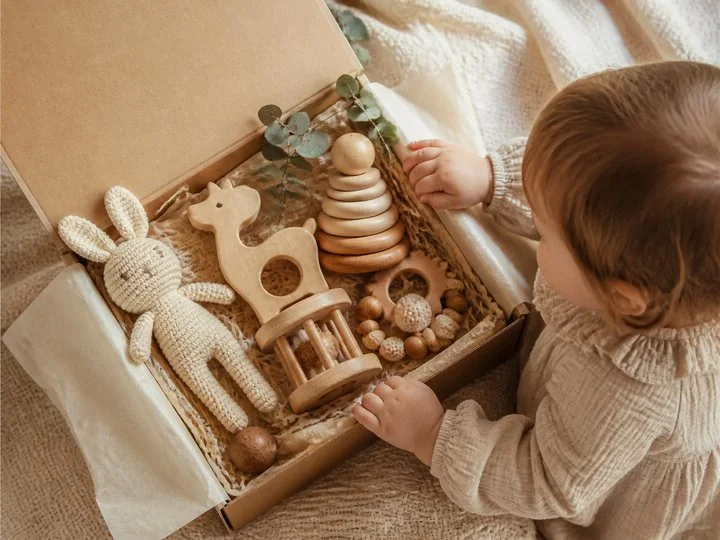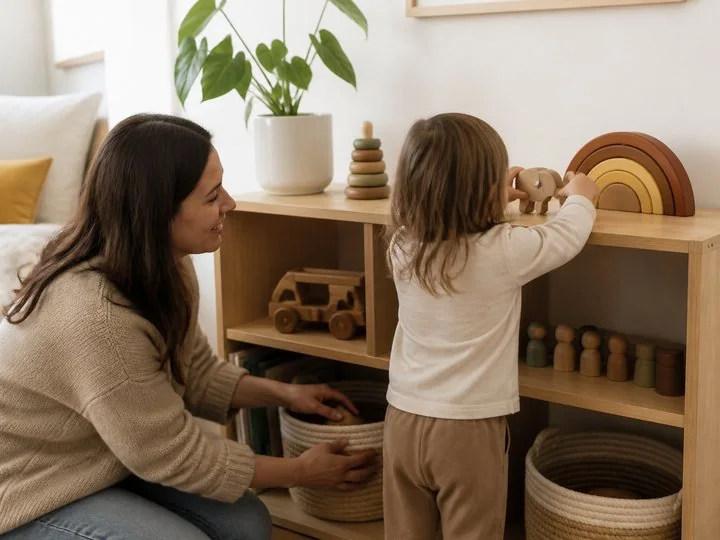

When the shelf is full, the answer is not always “no gift.” It is a gift with a clear place in the child’s life—and no hidden promise the household cannot keep.
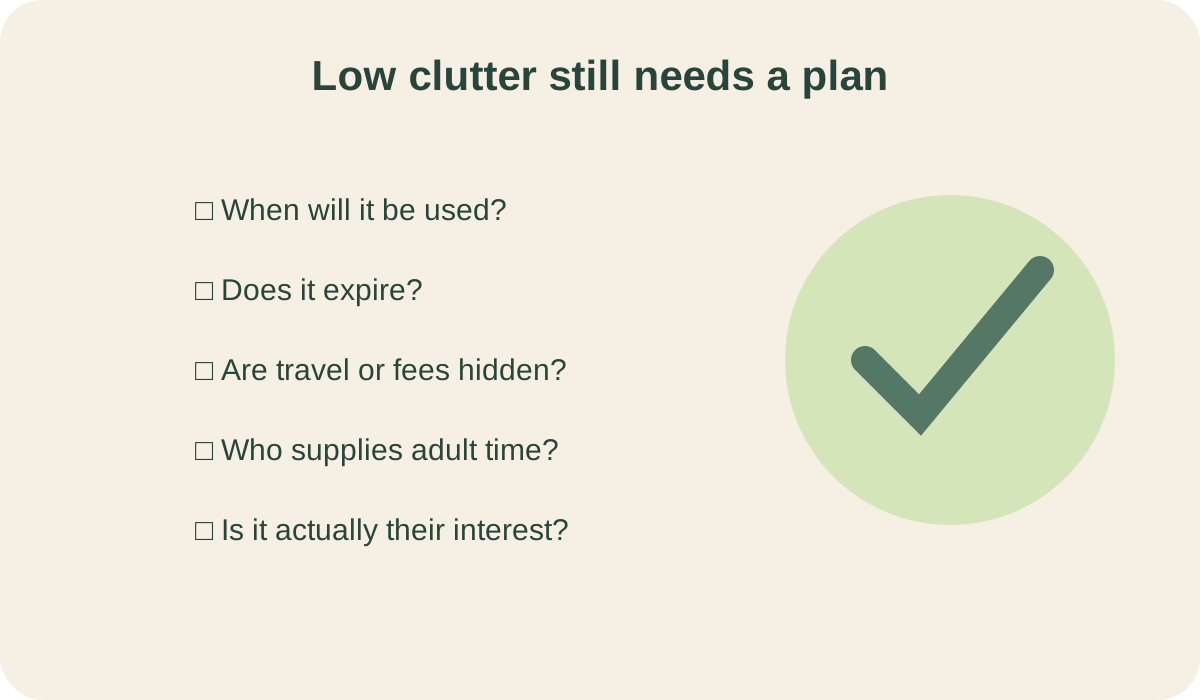
Five lower-clutter gift paths
Refill an existing interest
Replace used-up paper, tape, chalk, paint cakes, clay, baking decorations or garden seeds. Confirm age suitability and allergies, then match the exact materials the child already knows. A giant new craft kit often creates more sorting than making.
Upgrade one hard-working tool
A better apron, storage portfolio, child-sized watering can, durable flashlight or replacement game component can improve an established activity. The key is one-in, one-purpose—not replacing everything because a newer aesthetic exists.
Schedule an experience
A museum, garden, pool, performance or transit adventure becomes real only when someone chooses a date, provides transport and checks sensory, mobility and schedule fit. Put it on a calendar. Include a picture or related book for the child to open.
Give shared time
A coupon for “bake muffins with me” is meaningful only if the adult protects the time and brings the supplies. Use a specific date or repeatable ritual, not a vague promise.
Contribute to a larger goal
For a child saving for a bike, class, room project or membership, explain the contribution visibly. Preschoolers may need a picture chart rather than an account balance. Do not turn every gift into a lesson about delayed gratification.
Compare the trade-offs
| Gift type | Storage | Hidden demand | Best when |
|---|---|---|---|
| Consumable | Temporary | Cleanup and replenishment | Child already uses the medium |
| Experience | Near zero | Travel, booking, expiry, adult time | Date and access are confirmed |
| Membership | Near zero | Repeat transport; possible renewal | Family can visit more than once |
| Upgrade | Replaces one item | Old-item decision | Existing tool is genuinely limiting play |
| Contribution | None | Abstract for young children | Goal is child-known and attainable |
| Book | Modest | Repetition with adult | Topic is specific to the child |
Experience gifts are not morally superior to objects. A long drive, noisy venue or expiring voucher can create stress; one beloved physical material may be the lower-impact choice.
Coordinate without making the child the problem
Tell relatives what fits: “We have room for one item that stores in this basket,” or “She is using large watercolor paper every week.” Offer two or three choices. Avoid describing the child as spoiled or the playroom as a disaster in front of them.
For parties, “no gifts” can work if communicated warmly, but guests may still bring something. A book swap, drawing for the birthday child or contribution to a chosen outing gives gift-giving a concrete form.
Should toys leave before the birthday?
Do not secretly discard a child’s belongings to create visual order. Involve preschoolers with narrow choices: keep on the active shelf, store for later, pass to a known recipient, or repair. The toy rotation guide can reduce visible choice without pretending rotation is required.
Inspect items before donation; recalled or broken toys should not be passed on. Our repair triage and secondhand checklist apply to outgoing gifts too.
Low-clutter ideas by interest
- Builder: extra base plate or compatible structural pieces, not another complete system.
- Artist: favorite-format paper and one color family.
- Pretend player: a neutral cloth, not a 40-piece themed kit.
- Nature watcher: scheduled walk, notebook and child-safe magnifier.
- Music lover: class visit, simple acoustic instrument or shared playlist ritual.
- Story lover: library tote, audiobook access or a book from a known series.
For older children, the ages five-to-seven gift guide includes challenge and partner fit. For a new sibling transition, use big-sibling gift criteria rather than choosing another generic toy.
Sources and research note
The selection philosophy uses the AAP clinical report on appropriate toys, PBS Kids guidance on focusing on time and meaning during holidays, and NAEYC developmentally appropriate practice principles. Environmental wording follows the FTC Green Guides; “low clutter” is not a verified environmental-impact claim.